
Understanding the Volatility 75 Index for Nigerian Traders
📈 Explore the Volatility 75 Index with a practical guide for Nigerian traders 🇳🇬. Learn trading tips, unique traits, and risk strategies to trade confidently.
Edited By
George Mitchell
The volatility index, often known simply as the VIX, measures the market's expectation of price swings over the near future. For Nigerian traders, understanding the VIX is key because it reflects the level of fear or complacency in global markets, which can influence local investment decisions and trading strategies.
Unlike typical shares or currencies, the volatility index is not traded directly as a physical asset. Instead, it represents implied volatility derived from options on major indices like the S&P 500. This means that movements in the VIX often signal expected turbulence ahead rather than direct price changes. For example, a spike in the VIX often coincides with sharp drops in stock markets.
Nigerian traders accessing the VIX usually do so through derivative instruments such as futures, options, or exchange-traded products offered by international brokers. While local platforms may not provide direct VIX trading, fintech services like GTBank’s online market tools or platforms such as Remitano can facilitate access to global markets where VIX derivatives are listed.
Understanding volatility trading is especially relevant in Nigeria’s challenging economic environment, where factors like exchange rate fluctuations, oil price shocks, and political events directly impact the naira and equities. Trading the volatility index lets traders hedge exposure or speculate on market nervousness, potentially providing profit opportunities even during downturns.
Here are key points for Nigerian traders to grasp early on:
Volatility indicates expected price fluctuation, not direction: High volatility can mean large ups or downs.
VIX spikes often predict market downturns: Sudden rises signal growing fear.
Trading requires derivatives or ETFs: Local brokers may not have direct VIX products.
Risk management is vital: Volatility trades carry high risk, especially amid naira instability.
Volatility trading is not for the faint-hearted but can offer strategic advantages when properly understood and managed.
By mastering the basics of volatility and how it influences different markets, Nigerian traders can add a powerful tool to their portfolio. The next sections will break down practical strategies, platforms, and risk management techniques tailored to the Nigerian financial landscape.
Grasping the basics of the volatility index is essential for traders who want to navigate uncertain market conditions confidently. The volatility index shows how much the market expects prices to swing over a given period, offering traders a valuable gauge of investor sentiment and risk appetite. This insight helps investors time their trades better and protect their capital when markets become choppy.
The volatility index, often called the "fear gauge," measures market expectations for future volatility based on options prices. In simpler terms, it reflects how much traders think prices will move up or down in the near term. For example, when the market expects significant turbulence, the volatility index number rises sharply. Conversely, low index values indicate calm markets where price changes are expected to be mild.
Understanding this index helps traders spot periods of fear or complacency. For instance, during global shocks like oil price crashes or geopolitical tensions, the volatility index typically spikes. This signals traders to be cautious or even take advantage of price swings if they plan trades carefully.
Market volatility affects investments by influencing risk and potential returns. High volatility means prices can change quickly, increasing risks but also creating opportunities to profit from rapid moves. For Nigerian traders, this is particularly relevant as global uncertainty often spills over to local markets, affecting stocks, forex rates, and commodities like crude oil.
Awareness of volatility allows investors to adjust their portfolios accordingly. In volatile phases, traders might reduce exposure to risky assets or use hedging tools. Those who understand volatility can also place more effective stop-loss orders, reducing chances of sudden large losses.
Volatility indices play a significant role across financial markets by acting as benchmarks for risk levels. Institutions and individual investors use these indices to manage portfolios, price derivatives, and decide when to enter or exit positions.
For example, investment funds may increase cash holdings when volatility is high to shield against sharp declines. Likewise, traders use volatility indices to speculate directly by buying contracts tied to expected market swings, making these indices active trading instruments beyond simple indicators.
There are both global and local volatility indices, each serving different trading needs. Global volatility indices, such as the Chicago Board Options Exchange Volatility Index (VIX), measure expected volatility in major markets like the US S&P 500. Nigerian traders keep an eye on these because they often reflect global risk sentiment impacting Nigerian assets indirectly.
Local volatility indices, though less widespread, may track specific African or Nigerian market conditions. These can provide more tailored insights for traders focusing on local stocks or sectors, especially during periods when local events generate uncertainty separate from global trends.
The VIX remains the most widely followed volatility index worldwide. Known for its rapid movements during market corrections or crises, it sets the mood for global investors. For example, a VIX reading above 30 often signals elevated fear, prompting defensive moves.
Other volatility indices include the VSTOXX (tracking Euro Stoxx 50) and India VIX for the Indian market. Nigerian traders can learn from these indices too, especially when diversifying or trading international assets through global brokers.
Accessing volatility indices has become easier with modern trading platforms that provide real-time data and trading instruments like contracts for difference (CFDs) or futures linked to these indices. Popular brokers regulated in Nigeria and abroad offer access to these instruments, allowing traders to speculate on volatility without holding the underlying assets.
Mobile-friendly platforms like OPay and Flutterwave-enabled brokers also make it practical for Nigerian traders to monitor and trade volatility on the go, even amidst network challenges. Opening an account typically requires standard verification like BVN and proof of identity, but once set up, you can analyse market volatility live and place orders directly.
Volatility indices offer more than just a number — they are essential tools for Nigerian traders who want to stay in tune with market mood swings and manage risks effectively, especially when market unpredictability is the order of the day.
Understanding which volatility index to follow and how to access trading options enables Nigerian traders to make informed decisions and adapt strategies to changing market conditions.
Trading the volatility index in Nigeria requires knowing where and how to access the market effectively. Volatility indices reflect market uncertainty and can move quickly, so having the right trading platform is essential. Nigerian traders must consider brokers or fintech platforms that provide reliable access, regulation, and favourable trading conditions.
Choosing regulated brokers is fundamental. Regulation means the broker operates under rules meant to protect traders, such as segregation of client funds and adherence to fair trading practices. Brokers regulated by recognised authorities—like the Financial Conduct Authority (FCA) or the Cyprus Securities and Exchange Commission (CySEC)—offer better safety. For Nigerian traders, platforms like IG or Saxo Bank provide access to volatility indices with transparent fees and fair trading conditions.
It is important to avoid unregulated platforms even if they advertise high leverage or bonus offers; such brokers can be risky and might not safeguard your funds properly. Regulation brings peace of mind especially when trading volatile instruments.
Some Nigerian fintech firms now integrate access to international markets, including volatility indices, via partnerships with global brokers. Platforms like Trove and Bamboo, although primarily stock-focused, sometimes offer extended access to derivatives like CFDs. This can simplify the process by allowing traders to use a familiar local account and funding methods like bank transfer or bank USSD.
However, these fintech platforms might have limited direct products on volatility indices compared to international brokers. Still, their convenience and support in Naira make them attractive for beginners. Always check if the fintech partner supports the specific volatility instruments you want to trade.
Opening an account to trade volatility indices usually requires basic verification such as a valid means of identification (NIN, international passport, or driver’s licence), proof of address (utility bill or bank statement), and your Bank Verification Number (BVN). Nigerian traders should also prepare for anti-money laundering checks, which mean providing accurate personal details.
Some platforms may ask for a minimum deposit before trading begins. This can range from as low as ₦10,000 to higher sums depending on the broker. It’s wise to start small and increase your capital as you get more comfortable trading volatility.
CFDs are the most common way Nigerians access volatility indices. These contracts let you speculate on price movements without owning the underlying asset. For example, you trade based on the change in the VIX or similar indices. CFDs are popular because they allow leverage, meaning you only put down a fraction of the full trade value.
Keep in mind that leverage increases both potential gains and losses, so managing risk carefully is vital. CFDs also allow traders to go long or short, giving flexibility to profit from market ups or downs.
Some brokers provide trading in volatility index options or futures contracts. Options give you the right, without obligation, to buy or sell the index at a set price before expiry, useful for hedging or targeted speculation. Futures commit you to buying or selling the index at a future date and price.
These instruments tend to be more complex and may require higher minimum deposits or trading experience. They are less common among Nigerian retail traders but remain viable for those with more advanced strategies.
When trading volatility indices, you pay trading costs mainly through spreads and sometimes commissions. The spread is the difference between the buying and selling price quoted by the broker. Brokers with tighter spreads reduce the cost of entering and exiting trades.
Commissions are fees charged per trade, often a fixed percentage. Some brokers waive commissions but compensate with wider spreads. Nigerian traders should compare platforms carefully, considering both spreads and commissions, to ensure their costs don’t eat too much into profits.
Choosing the right broker and understanding trading instruments is just as important as your strategy for volatility index trading. Careful selection and awareness of costs can save you from many headaches down the road.
Trading the volatility index requires an understanding of various strategies that can help you capitalise on market fluctuations effectively. These approaches range from using technical analysis to reacting to news and events, as well as choosing between long-term and short-term trading styles. Applying the right strategy can reduce risks and improve your chances of making profits, especially given the fast-paced nature of volatility trading.
Bollinger Bands and the Relative Strength Index (RSI) are among the most useful tools for volatility trading. Bollinger Bands plot price volatility by surrounding a moving average with an upper and lower band, which expand when volatility increases and contract when it decreases. This helps traders spot overbought or oversold conditions. For example, if the volatility index hits the upper band, it may suggest a spike that could soon reverse.
RSI measures the speed and change of price movements, helping identify potential reversal points. An RSI reading above 70 often indicates an overbought market, signalling a possible drop in volatility, while below 30 suggests oversold conditions and a potential rise.
Recognising when a trend reverses or breaks out is key in volatility trading. A sustained rise or fall in the volatility index can signal changing market sentiment. For instance, a sudden breakout above a resistance level can mean an upcoming period of high volatility, often tied to economic uncertainty or political events. Spotting these breakouts early gives traders a chance to enter positions before major price moves.
Similarly, watching for trend reversals where a rising volatility trend begins to fall, or vice versa, allows traders to adjust their positions accordingly or lock in profits.
Certain chart formations are especially important when trading volatility. Patterns such as triangles, wedges, and flags can indicate consolidation periods before a big move. For example, a symmetrical triangle on the volatility chart often hints at an impending breakout, either upwards or downwards.
Understanding these patterns helps Nigerian traders anticipate volatility spikes or drops and plan trades around them rather than reacting late when the movement is already in progress.
Economic releases like inflation rates, GDP data, and Central Bank of Nigeria (CBN) policy announcements often trigger sharp moves in volatility. Political events, especially during election seasons or amid policy uncertainties, can also cause market jitters.
For example, during the last guber election season, volatility indices saw increased activity reflecting traders’ nervousness. Being aware of these events allows traders to prepare for sudden shifts instead of being caught off guard.
Seasoned traders often take cautious positions before key announcements. This might mean reducing trade size or setting tighter stop-losses to manage risk. Some may also employ hedging strategies or avoid trading outright to preserve capital.
Pre-positioning involves analysing market expectations and positioning trades that could benefit if actual results deviate significantly. For instance, if inflation data is expected to rise, preparing for higher volatility by setting buy orders on volatility indices can pay off.
Certain periods, like just before major economic reports or unexpected geopolitical news, can produce erratic price swings away from typical patterns. Many traders choose to sit on the sidelines during these high-risk moments to avoid abrupt losses.
For Nigerian traders dealing with limited internet stability or delayed order execution, avoiding these stressful periods can be a wise decision to protect capital.
Swing trading involves holding positions for days or weeks, capturing medium-term shifts in market sentiment. For volatility indices, this means taking advantage of sustained periods of increased or decreased volatility.
A swing trader might buy volatility index CFDs during times of rising economic uncertainty and hold until signs of easing appear. This approach suits traders who cannot monitor markets constantly but want to benefit from larger moves.
Day trading means opening and closing positions within the same day, capitalising on intraday price swings. Volatility indices can be attractive here due to their frequent fluctuations.
However, day traders must keep close watch on technical indicators and be quick to react to breaking news. For example, during weak naira phases or fuel scarcity news, volatility can jump sharply within hours, presenting short, sharp opportunities.
While availability in Nigeria might be limited, volatility exchange-traded funds (ETFs) and similar instruments offer ways to gain exposure without trading derivatives directly. These products track volatility indices or related assets and provide diversification plus easier management.
Traders interested in longer-term exposure or portfolio hedging often explore these ETFs where accessible abroad, supplementing direct volatility trading strategies.
Effective trading of volatility indices blends technical know-how, news awareness, and choosing strategies that fit your capacity and risk tolerance. Nigerian traders who master these elements position themselves well in a market often seen as unpredictable but rich with opportunities.
Managing risks is absolutely necessary when trading the volatility index, especially because these markets can shift quickly and unpredictably. Unlike regular stocks, volatility indices often jump sharply in response to news or market sentiment, which can wipe out traders’ accounts if they aren’t careful. By using proper risk management techniques, you can protect your capital and stay in the game longer, giving you a better chance to benefit from these swings.
Stop-loss orders serve as a safety net. When trading the volatility index, price movements can be sudden and large, so having a well-placed stop-loss prevents losses from ballooning beyond what you're willing to risk. For example, if the market suddenly spikes up but your position is against that movement, your stop-loss will close the trade automatically to limit the damage. This is particularly helpful during unpredictable events, such as unexpected Central Bank of Nigeria decisions or political unrest.
Setting take-profit levels allows you to lock in gains before the market reverses. Because volatility indexes can revert quickly after a sharp move, waiting too long may cause you to give back all your profits. Place your take-profit points based on recent price swings or technical indicators like Bollinger Bands, so you exit when the price is near a likely resistance or support level. This ensures you capitalise on sudden price shocks without being greedy.
Risk parameters like stop-loss distance or position size shouldn’t be fixed but adjusted to current market volatility. When the volatility index is high, wider stop-losses may be necessary to avoid being stopped out too early, while during calm periods, tighter stops keep risk minimal. For instance, if the VIX is over 30, indicating turbulence, you might increase your stop range and reduce position size. That way, your risk adapts to changing market moods.
You should size trades logically according to your total trading capital. A common rule is to risk only 1-2% of your account on a single trade, so if you have ₦500,000, don’t risk more than ₦5,000-₦10,000 per trade. This preserves funds even if several trades don’t work out, which happens often in volatile markets.
Don’t put all your eggs in one basket. Spread your capital across different trade setups or asset classes to reduce the effect of a single loss. For example, you could allocate 50% of your capital to volatility index trades, and the rest to more stable instruments like blue-chip stocks or forex. This diversification helps smooth overall returns.
Use techniques like setting maximum drawdown limits or trailing stops to protect gains and cut losses early. For example, if your portfolio drops 10% from peak, you may pause trading for a while to reassess your strategy. Protecting your portfolio is the foundation for long-term success, especially in a market known for sudden price shocks.
Impulse trading during wild market swings is a fast track to losses. The volatility index tempts traders into constantly jumping in and out, but this often means ignoring strategy and taking unnecessary risks. Sticking to a planned number of trades per day and setting alerts rather than watching price constantly can help you avoid emotional decisions.
Not every jump in the volatility index means a major market event. Sometimes, these are false alarms caused by normal market fluctuations or technical corrections. Jumping on a spike without verifying the cause can lead to premature losses. It’s best to check news or economic data that might explain the move before reacting.
Even though volatility index trading focuses on price swings, ignoring broader market trends or underlying economic factors can lead to mistakes. For instance, a strong bull market may see overall low volatility, so betting on a volatility spike without reason may fail. Aligning your trades with prevailing market conditions and Central Bank policies improves your chances of success.
Successfully trading the volatility index in Nigeria means understanding the risks involved and managing them smartly. By setting clear stop-loss and take-profit levels, sizing positions carefully, and avoiding common emotional traps, you can protect your ₦ capital and trade confidently even when markets get bumpy.
Trading the volatility index requires a unique approach tailored to both global market movements and local Nigerian realities. Practical strategies that consider the challenges of naira fluctuations, market hours, and technology access can help you navigate this complex market with more confidence and effectiveness.
The naira often experiences swings due to external pressures like oil prices or CBN interventions. Such fluctuations affect your trading capital and the margin requirements brokers set. For example, during a naira depreciation phase, traders may see increased costs for international transactions or reduced purchasing power when funding their accounts. Keeping an eye on inflation trends and import dependency in Nigeria is equally crucial because these impact market sentiment and volatility indirectly.
Nigeria’s stock market closes by 2:30 pm WAT, but global volatility indices like the VIX operate through US market cycles. Nigerian traders should consider trading during the overlap with US market hours (roughly 2:30 pm to 10:00 pm WAT) to capture meaningful price movements. Trading outside these periods may mean reduced liquidity and wider spreads, increasing costs. For instance, a trader active on a platform like MT4 or MT5 must plan trades for when most volume concentrates to avoid slippage.
Internet speed and stability can be unpredictable in many parts of Nigeria, so using lightweight and reliable mobile trading applications is essential. Platforms optimised for low data consumption, such as OANDA’s app or IG’s mobile platform, allow seamless chart monitoring and order execution even on limited bandwidth. Additionally, choosing apps with offline charting capabilities can help maintain analysis despite intermittent connectivity.
In Nigeria, staying informed via platforms like BusinessDay, Nairametrics, and official CBN releases provides a significant advantage. Timely access to economic indicators, policy changes, or political events happening locally can signal shifts in market volatility that affect your trade decisions. For example, a sudden hike in the Monetary Policy Rate (MPR) by CBN often triggers currency volatility impacting the naira and, by extension, market confidence.
The Central Bank of Nigeria’s interventions, such as changes in foreign exchange rules or liquidity injections, shape market conditions heavily. When CBN imposes forex restrictions or introduces new regulatory frameworks, this alters cash flow and risk perception in the markets. Traders who track these announcements can better anticipate spikes or drops in volatility, adjusting their positions accordingly.
Even though Nigerian markets have local quirks, global events like US Fed rate decisions, geopolitical tensions, or sudden oil price shocks impact volatility indexes globally and locally. For instance, a surprise Federal Reserve interest rate cut tends to lower the VIX temporarily, affecting traders worldwide. Understanding these influences helps you position trades ahead or hedge against potential volatility surges.
Using demo accounts from brokers like IG, FXTM, or Alpari gives Nigerian traders a risk-free environment to test strategies and understand volatility patterns. This hands-on practise helps build confidence and uncovers how market movements feel without risking real capital. Demo trading is especially helpful before scaling up to live markets, reducing impulsive mistakes caused by emotional trading.
Joining groups on platforms such as Nairaland or WhatsApp trading communities dedicated to Nigerian traders allows sharing of ideas, strategies, and warnings. Experienced traders often highlight upcoming events, broker reliability, or unusual volatility spikes. This peer learning can fill gaps often missed in individual analysis.
Markets evolve, and keeping abreast through courses, webinars, and reading material helps sharpen your ability to read volatility trends. Combining academic knowledge with real-life Nigerian market examples—like the impact of ember months spending or political announcements—makes your trading approach more relevant and practical.
Trading volatility indices is not just about technical skills; it's about adapting to the unique economic and infrastructural realities Nigerian traders face every day.
By grounding your strategy in local context while staying connected to global movements, you position yourself for smarter, more informed trading decisions.
📈 Explore the Volatility 75 Index with a practical guide for Nigerian traders 🇳🇬. Learn trading tips, unique traits, and risk strategies to trade confidently.
📊 Explore binary trade basics, option types, smart strategies, risks & regulations. A practical guide for Nigerian investors to navigate markets confidently.

📱 Explore app trade in Nigeria: learn how to safely exchange, sell, and manage apps while navigating legal rules and top platforms. Maximize your app value!
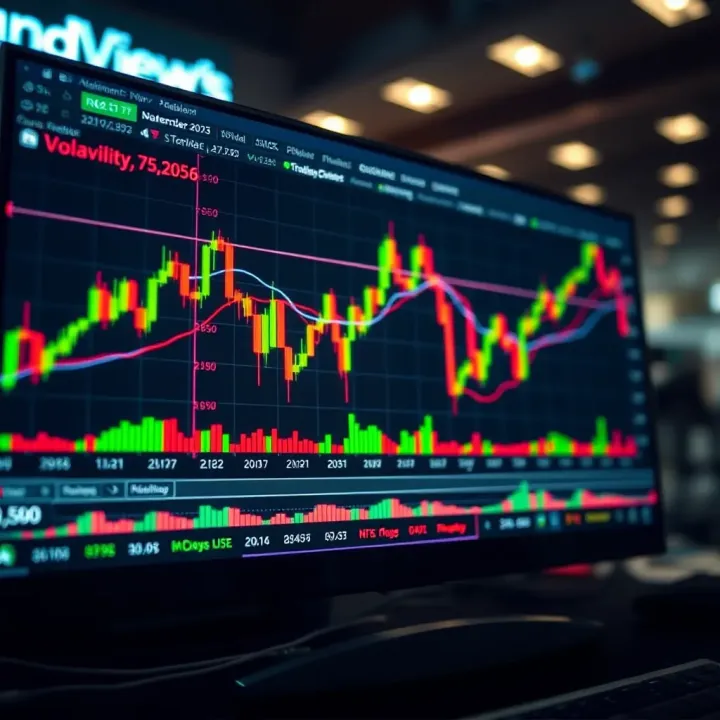
📊 Discover how to trade Volatility 75 Index binary options on TradingView with strategies, analysis tools, and risks tailored for Nigerian traders.
Based on 6 reviews