

Understanding Copy Trading: A Clear Guide
📈 Copy trading lets you mirror expert traders’ moves automatically in your own account. Learn how it works, who it fits, common platforms, and tips to start wisely.
Edited By
Isabella Norton
Continuation patterns are a key element in technical analysis, helping traders spot when a price trend is likely to keep rolling. For investors and financial analysts, especially those active in Nigerian markets, understanding these patterns can significantly boost decision-making accuracy.
In essence, continuation patterns signal that the current trend — whether up or down — has a good chance of persisting. Recognising these setups early can be the difference between catching a profitable move or missing out.
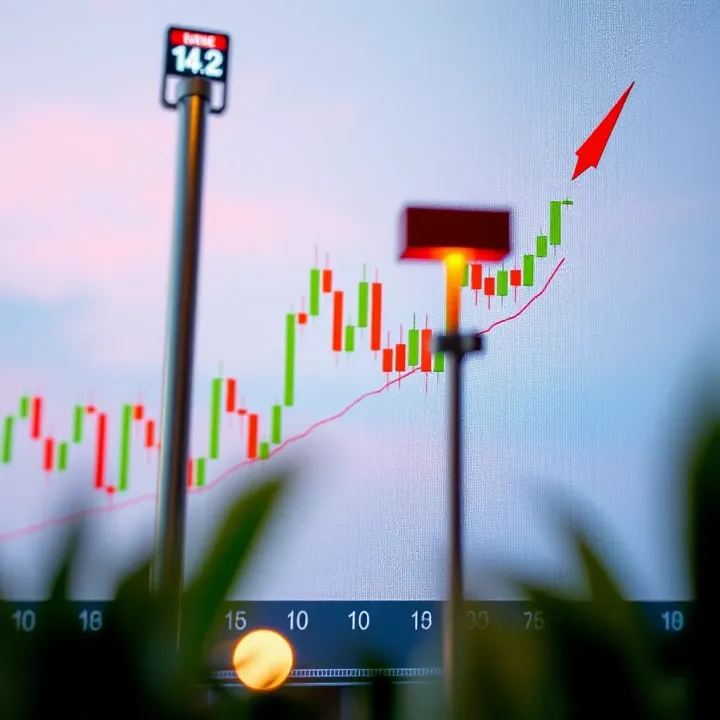
Common well-known patterns include flags, pennants, and triangles. For example, a flag looks like a small rectangle slanting against the trend in a strong upward market, indicating a short pause before prices surge again. Traders in Nigeria often see this during periods of high activity on the NGX or in forex pairs involving the naira.
It's crucial to focus not only on the pattern shape but also on volume. A continuation pattern backed by increasing volume usually signals a sturdier likelihood of trend continuation. For instance, if a stock like MTN Nigeria shows a pennant on its daily price chart and trading volume rises during the breakout, it suggests momentum is sustained.
Remember, continuation patterns are not crystal balls. They work best within a broader strategy that includes risk management and market context.
Here’s how to spot and use continuation patterns:
Identify the trend: Determine if the market is in an uptrend or downtrend before the pattern forms.
Find the pattern shape: Spot familiar shapes like flags, pennants, or triangles during short consolidations.
Check volume behaviour: Volume should dip during the formation and rise at breakout for confirmation.
Trade in the trend’s direction: Use the breakout point to enter trades, aligning your stops just outside the pattern’s bounds.
By mastering these steps, traders in Nigeria and elsewhere can sharpen their entries and exits, increasing chances of consistent profits. Continuation patterns simplify complex price movements, making market behaviour clearer and more actionable.
Understanding these patterns deeply requires practice, reviewing charts regularly, and adapting to market nuances, including volatility in Nigerian equities and forex influenced by naira fluctuations. However, the payoff for disciplined traders is a more confident and informed approach to the market’s twists and turns.
Continuation patterns are essential signals for traders aiming to spot the likely direction of price movements before the market moves further. Simply put, these patterns suggest that the current trend—whether upward or downward—is likely to carry on after a brief pause or consolidation. For anyone trading Nigerian equities or forex, recognising these patterns can sharpen timing and improve entry or exit decisions, reducing guesswork.
Continuation patterns form when prices take short breaks within a larger trend, often moving sideways or slightly retracing before resuming the original trajectory. They are chart formations such as flags, pennants, or triangles that show a temporary pause rather than a reversal. The idea is to help traders confirm that the prevailing trend remains intact and potentially forecast how much further the price might go. For example, a Nigerian stock in a bullish rally might form a flag pattern on the daily chart before another leg up, signalling a good spot to buy or add positions.
These patterns act like a microcosm of market psychology. When prices consolidate, it usually means buyers and sellers are taking a breather, assessing whether the trend is still supported by the fundamentals or broader market forces. In a strong bullish trend, a continuation pattern reflects ongoing confidence among investors, even if trading volumes dip during consolidation. Conversely, in a downtrend, these patterns reveal persistent selling pressure despite temporary pauses. Observing volume is key here—typically volume declines during the formation of the pattern and then spikes when the price breaks out, confirming renewed market enthusiasm. For instance, in the Nigerian forex market, seeing a pennant after a steep naira depreciation might indicate the downtrend will persist before stabilising.
Understanding continuation patterns provides traders with an edge: confirming that current market momentum is likely to continue helps in planning trades with higher probability setups, especially important amid Nigeria’s often volatile and fast-moving markets.
Recognising these patterns means you can position yourself advantageously ahead of fresh price moves. This insight proves practical across different asset classes, including Nigerian stocks listed on the NGX or forex pairs like USD/NGN. Knowing when a trend will pause—but not stop—is a core skill to managing trades confidently rather than guessing blindly.
When trading, recognising common continuation patterns helps you predict if a price trend is likely to keep moving in the same direction after a brief pause. These patterns signal moments when the market catches its breath before resuming a strong move, allowing traders to position themselves advantageously. Understanding these shapes on charts is vital, especially in volatile markets like Nigeria’s equities and forex.
Flags and pennants are short pauses during a strong trend, often lasting just a few days or weeks. A flag looks like a small rectangle, slanting against the existing trend, whereas a pennant forms a small triangle from converging trendlines. Traders watch for a sharp price move, the "flagpole", followed by this brief pattern which indicates temporary indecision. Once the price breaks out in the original direction, it usually resumes the prior trend.

For example, if Guaranty Trust Bank (GTBank) stock surges sharply, then forms a slight downward slanting flag over many sessions, a breakout above can signal continuation. In forex, the naira-dollar rate sometimes shows pennant patterns during periods of rapid moves followed by tight consolidation.
Rectangles and channels represent price moving sideways in a clearly defined range after an initial trend. Rectangles form when price bounces between horizontal support and resistance, while channels have a slightly upwards or downwards tilt. These formations show the market weighing its options before committing to a direction.
Channels, in particular, help identify gradual strength or weakness. For instance, the Nigerian Stock Exchange (NGX) All-Share Index might move within a channel after a rally, suggesting an eventual continuation once it breaks out. Traders often buy near the lower boundary and sell near the upper, preparing for a breakout to continue the original upward or downward move.
Triangles are powerful continuation patterns defined by converging trendlines. A symmetrical triangle is a neutral pattern formed by price making lower highs and higher lows. It indicates uncertainty but tends to resolve by continuing the prior trend once price breaks out.
Ascending triangles show a flat upper resistance line with rising lows, signalling building buying pressure. Descending triangles have a flat support line with falling highs, reflecting rising selling pressure.
A practical example involves forex pairs like USD/NGN showing an ascending triangle during a recovery phase. Once price breaks above the horizontal resistance, traders expect further gains. The key with triangles is to wait for breakout confirmation before entering trade, as false moves can occur.
Recognising these continuation patterns in charts is like reading market breathers — they tell you when to get ready for the next big move rather than getting caught on the wrong side.
In sum, flags and pennants indicate sharp but brief pauses, rectangles and channels show sideways consolidation, and triangles reveal tightening pressure before a trend continues. Mastering these helps traders make timely entries and manage risk better, particularly in fast-moving markets like Nigeria’s.
Recognition of continuation patterns on price charts is an essential skill for traders and investors aiming to anticipate the ongoing market trend. These patterns signal brief pauses in price movement before the trend resumes, providing traders with entry points aligned with prevailing momentum. In Nigerian markets, where volatility can be high, spotting these patterns sharply reduces the chance of mistimed trades.
Start by identifying periods of consolidation where price movements narrow after a strong trend. Look for shapes such as parallel lines in rectangles or channels, small symmetrical triangles, or short, sideways flags and pennants. For example, in the Nigerian Stock Exchange (NGX), a stock like MTN Nigeria might show a flag pattern after a sharp upward price rally before continuing its rise. Notice the direction of trendlines: they typically slope against the prior trend within the pattern, indicating a pause rather than reversal.
It’s crucial to differentiate between a continuation setup and a reversal. Continuation patterns commonly maintain the angle of the original move, though with less volatility. Pay close attention to the time frame and price scale to distinguish meaningful patterns from random noise, especially on daily or hourly charts.
Volume acts as a vital confirmation tool for continuation patterns. Generally, volume tends to decrease during consolidation phases within the pattern, reflecting the market’s temporary indecision. Once the price breaks out in the trend direction, volume should spike sharply, confirming strength.
Consider a forex pair like USD/NGN: during the pennant phase after a strong uptrend, you might see declining volume, followed by a sudden surge upon breakout. Low volume breakouts are often suspect and could signal false moves. Tracking volume helps you avoid being caught in such traps.
Technical indicators add an extra layer of confidence when confirming continuation patterns. Moving averages (MAs), especially the 50-day and 200-day, can highlight the overall trend and support the pattern’s direction. For instance, if a stock like Dangote Cement holds above its 50-day MA during a consolidation pattern, it strengthens the likelihood of a continuation.
Oscillators like the Relative Strength Index (RSI) and Moving Average Convergence Divergence (MACD) also prove useful. An RSI that stays above 50 during the pattern phase indicates sustained bullish momentum. MACD crossovers aligning with breakout points further cement true continuation.
Spotting continuation patterns early and confirming them through volume and indicators empower traders to position themselves with the trend — vital in Nigeria’s fast-moving markets.
In summary, precisely identifying continuation patterns involves focusing on price shapes, volume behaviour, and supporting technical tools. Practising these skills on local charts builds tactical edge and improves timing, essential for success both in equities and forex trading within Nigeria.
Using continuation patterns in Nigeria's trading environment brings several practical advantages. Given our markets’ unique features—like periods of high volatility, liquidity swings, and economic event impacts—applying these patterns helps traders anticipate trend persistence despite sudden shocks. This understanding is especially important for equities and forex markets, where timely entry and exit decisions can protect investments and maximise gains.
Consider a stock like Dangote Cement or Nestlé Nigeria, which often shows well-defined trends interrupted by consolidation phases forming flags and pennants. Recognising these pauses in price action allows investors to predict the next price move and avoid premature selling. In forex, the NGN/USD pair frequently experiences continuation patterns driven by factors such as CBN policy shifts or oil price changes. For instance, a bullish pennant forming after a steady NGN recovery may signal an extended uptrend, permitting forex traders to position ahead wisely.
Nigerian markets can be unpredictable with sudden liquidity gaps, partly because retail traders dominate some segments while institutional activity remains uneven. This volatility means continuation patterns may sometimes fail or produce false breakouts. Traders should pay keen attention to volume signals—low or irregular volume might invalidate a pattern’s reliability. Moreover, trading during periods of low liquidity (like ember months) calls for more cautious position sizing and tighter stop-loss orders to manage risk effectively.
Extension of continuation pattern analysis gets sharper by factoring in Nigerian economic indicators. Indicators such as inflation rates, the Monetary Policy Rate (MPR) set by CBN, and crude oil price fluctuations influence market momentum. For example, if a continuation pattern emerges in stocks during a period of expected petrol subsidy removal, traders should anticipate increased volatility and possible trend changes. Bloomberg Nigeria or Nairametrics provide timely data to complement chart analysis and give a fuller picture of market behaviour.
Tip: Combining technical patterns with insights on local developments like fiscal policy or foreign exchange regulation boosts confidence in trading decisions.
In summary, applying continuation patterns in Nigeria’s trading context takes more than just spotting shapes on the chart. It involves integrating market realities, understanding volume and liquidity nuances, and linking price action to economic events. This approach arms traders and investors with a holistic view, increasing odds of successful trades in Nigeria’s dynamic financial markets.
Continuation patterns are useful in predicting trend persistence, but they aren't foolproof. Knowing their limitations saves you from costly mistakes. For example, false breakouts where price briefly crosses a pattern boundary but fails to continue the trend can wipe out gains quickly if unprepared.
False breakouts are one of the most common pitfalls when trading continuation patterns. They occur when price moves beyond support or resistance levels indicated by a pattern but then reverses sharply. In the Nigerian equities market, say in a stock like Dangote Cement, a trader might spot a flag pattern suggesting upward continuation, only for unforeseen market news to send the price tumbling instead. Volume often drops during such fake signals, which provides a clue for cautious traders.
Recognising these false signals calls for patience and confirmation. Waiting for a candle close beyond the pattern or combining volume indicators can reduce the risk of chasing a fake move. The Nigerian forex market, with its typical volatility especially around key economic data releases, demands extra care to avoid such traps.
Managing risk means always defining how much you stand to lose if the market turns against you. Stop-loss orders are critical here. For instance, if a continuation pattern fails and price breaks the pattern support, a stop-loss just below that level limits losses without waiting for worse falls. Position sizing, the practice of deciding how much capital to risk on each trade, complements stop-losses. In a market like Nigeria’s where liquidity can vary, risking 1-2% of your trading capital per trade is a sensible approach.
This disciplined approach prevents a bad trade from derailing your entire portfolio. It’s like wearing a helmet while riding okada—you might not need it every time, but it saves you when things go south.
Continuation patterns work best when not relied on in isolation. Combining them with other technical tools or fundamental analysis strengthens decisions. For example, pairing a triangle pattern in the NGX with positive corporate earnings reports or macroeconomic indicators such as CBN monetary policy shifts provides a fuller picture.
Indicators like Moving Averages or the Relative Strength Index (RSI) also help confirm whether a trend is strong enough to follow through. In Nigeria’s forex trading, where sudden policy changes or FX restrictions can impact price action, having multiple confirmations reduces the chance of being caught off guard.
Smart trading combines pattern recognition with proper risk controls and diverse strategies. Understanding these limitations prevents overconfidence, helping preserve capital for the next opportunity.
Traders and investors in Nigeria can thus improve their edge by recognising when continuation patterns might fail, using risk management tools like stop-losses effectively, and confirming signals with other methods before committing funds.
📈 Copy trading lets you mirror expert traders’ moves automatically in your own account. Learn how it works, who it fits, common platforms, and tips to start wisely.

Learn how mitigation in forex trading helps you manage risks and protect investments 📉. Practical strategies for both new and experienced Nigerian traders.

Learn how margin works in forex trading 💹, understand margin requirements and risks ⚠️, and get smart tips to manage margin for safer trades in Nigeria 🇳🇬.

🤖 Discover how binary bots work in trading, their strategies, risks, and benefits, especially for Nigeria's binary options traders. Stay informed, trade smart!
Based on 11 reviews