

TradingView vs Deriv.com: Nigerian Traders’ Guide
Explore TradingView 📈 and Deriv.com 💹 in Nigeria 🇳🇬! Compare features, ease of use, and get tips to boost your trading success today.
Edited By
Daniel Prescott
Trading in Nigeria’s dynamic financial markets requires sharp tools and accurate data to make sound decisions. Using TradingView charts on the Deriv platform lets you see price movements, trends, and technical signals with clarity that simply could boost your ₦ trading profits.
TradingView is popular worldwide for its user-friendly interface and comprehensive charting tools. For Nigerian traders, combining this with Deriv’s flexible trading features opens practical ways to analyse assets like forex pairs, commodities, synthetic indices, and cryptocurrencies.
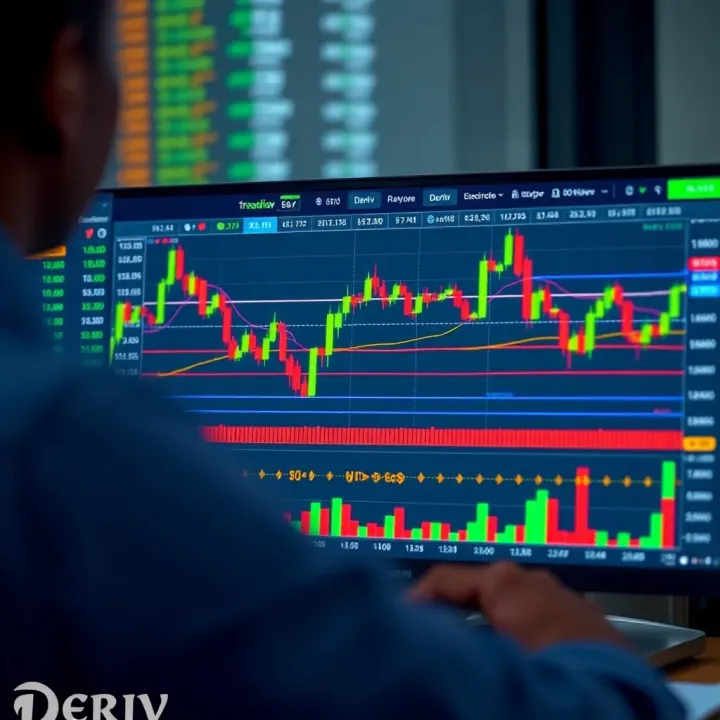
Using TradingView charts on Deriv brings live, real-time data and advanced indicators to the palm of your hand. This allows you to respond faster to market changes, reducing guesswork.
Key benefits for Nigerian traders include:
Customisable charts: Select chart types—candlestick, line, or bar—and adjust time frames from minutes to months.
Technical indicators: Use popular tools like RSI (Relative Strength Index), MACD (Moving Average Convergence Divergence), and Bollinger Bands to gauge momentum and volatility.
Drawing tools: Mark support and resistance levels or trend lines directly on charts to spot key entry and exit points.
Alerts: Set price or indicator alerts to stay updated without constant monitoring.
Leveraging these capabilities allows you to create a trading strategy tailored to your style and market conditions specific to Nigerian financial events such as CBN policy changes or naira fluctuations.
This guide will walk you through setting up TradingView within your Deriv account and explain how to use core features effectively. By the end, you’ll be able to enhance your market analysis and make better-informed trading decisions on Deriv, especially for the Nigerian market context.
TradingView stands out as an online charting platform essential for traders who want to make informed decisions. It offers real-time data, interactive charts, and a wide variety of tools that help Nigerian traders analyse market patterns effectively. Unlike static charts, TradingView allows users to customise indicators, draw trendlines, and track multiple assets simultaneously, providing a hands-on approach to technical analysis.
Retail traders in Nigeria benefit from TradingView’s accessibility and rich features without the need for expensive software. The platform's user-friendly interface means even novice traders can quickly learn to read charts and spot trends. For example, a trader tracking the naira-dollar exchange rate can set alerts or use RSI to gauge overbought or oversold conditions, helping avoid costly missteps.
One of TradingView’s key strengths is its compatibility with various trading platforms. It integrates smoothly with brokers and platforms around the world, including Deriv, making it a versatile tool. Nigerian traders can connect TradingView charts to Deriv’s interface, simplifying the transition from analysis to execution. This connection ensures chart updates and trading signals synchronise, removing delays that could erode potential profits.
TradingView is primarily a web-based charting software that offers detailed and dynamic visual displays of market data. It pulls price feeds from exchanges globally and displays them through advanced chart types like candlesticks, Heikin Ashi, and Renko. The platform supports hundreds of technical indicators that help traders make sense of price movements.
TradingView appeals to retail traders because it zeroes in on convenience and powerful analytical tools. Nigerians do not need costly hardware or complicated installations; all functionalities work right on a browser or via the mobile app. Plus, traders can share, follow, and learn from other community members, giving access to local and international perspectives.
TradingView’s wide compatibility means it fits into many brokers’ ecosystems. This flexibility helps Nigerian traders link their TradingView setup with platforms like Deriv, ensuring seamless charting data flow alongside trading orders. The platform’s API and integrations eliminate the common frustration of switching between separate analysis and trading windows, streamlining workflow.
Deriv offers an online trading platform known for simplicity and rich asset choices tailored for diverse trader needs. It combines traditional CFDs, options, and multipliers, allowing Nigerians to experiment with different strategies. Deriv’s dashboard is intuitive and supports flexible stake sizes, an advantage for traders managing small to medium capitalisation.
On Deriv, Nigerian traders can access forex pairs, synthetic indices, commodities like gold and oil, stocks, and cryptocurrencies. This wide asset variety means traders can diversify easily without hopping across platforms, saving time and reducing complexity. For instance, a trader can switch from naira-based forex pairs to synthetic indices to hedge against local market swings.
Deriv integrates TradingView to enhance charting and technical analysis capabilities. Instead of relying on basic charts, traders gain direct access to TradingView’s advanced features within Deriv’s environment. This combination empowers users to make precise entry and exit decisions based on real-time and highly customisable charts, which can significantly improve trading accuracy and outcomes.
In the Nigerian trading space, platforms that combine robust analysis tools with diverse asset offerings, like Deriv paired with TradingView, create practical advantages. They help traders move beyond guesswork and improve trading discipline.
This understanding sets the stage for Nigerian traders eager to improve their technical analysis and trading results using these powerful tools together.
For Nigerian traders aiming to improve their market analysis, setting up TradingView charts on Deriv is a key step. It allows you to combine TradingView's advanced charting tools with Deriv’s trading interface, making it easier to spot trends and make informed decisions. Since Deriv supports seamless integration, getting the charts right from the start speeds up your setup and reduces chances of errors during trading.
To begin, log in to your Deriv account using your email and password through the official website or mobile app. Once logged in, locate the trading section, usually marked 'Trade' or 'Chart'. Here, you’ll find an option labelled ‘TradingView Charts’ or simply a chart icon. Clicking this takes you directly to the TradingView interface embedded within Deriv’s platform.
This navigation is practical because it keeps your workflow within one platform, making quick trades easier without switching tabs. For example, if you spot a good entry point using a candlestick pattern, you can jump to placing a trade immediately.
After accessing the charts, you have many options to customise the interface. You can adjust the chart type — candlestick, line, or bar charts — depending on what suits your strategy best. Nigerian day traders might prefer shorter time frames like 5 or 15 minutes to catch quick price moves during active market hours.
You can also add or remove toolbars and adjust colours for better visual comfort, especially if you trade late into the night when eyes get tired quickly. For instance, dark mode reduces strain, making it easier to analyse data during low light conditions common in Lagos.
Deriv allows you to enable core TradingView features such as technical indicators, alerts, and drawing tools directly within the platform. Once enabled, these tools update in real-time alongside live market data, which is crucial for responding to market changes without delays.
For instance, you can set an alert to notify you when the RSI (Relative Strength Index) reaches an oversold level on your preferred asset. That way, you don’t have to watch the charts all day; the platform does the monitoring for you.
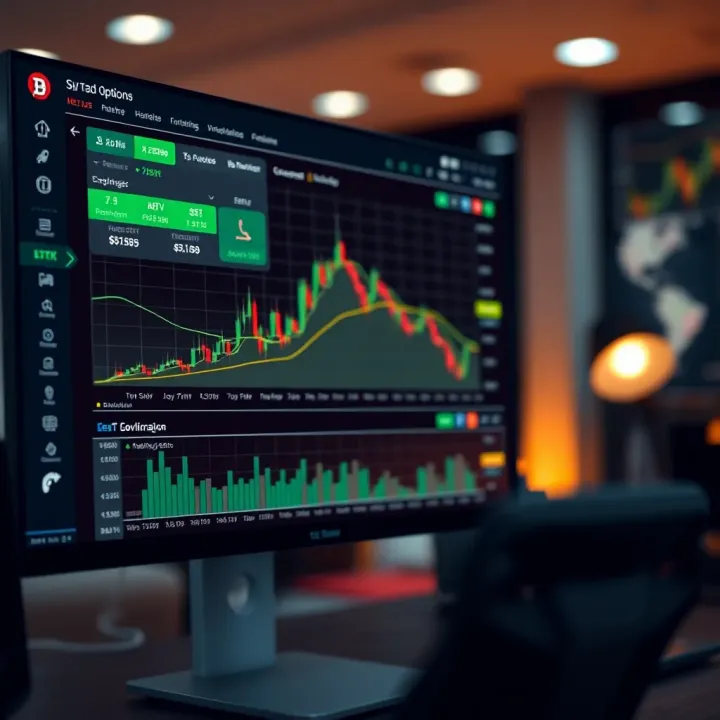
Drawing tools in TradingView include trendlines, Fibonacci retracements, and support/resistance levels. On Deriv, these tools are fully functional, allowing you to mark critical price areas that influence your trading plan. For example, drawing a trendline on the USD/NGN forex pair can help identify when a bullish or bearish trend might break.
Different chart types provide varied perspectives on price movements. Candlestick charts, popular among Nigerian traders, offer detailed price action insight, while Heiken Ashi charts help smooth out market noise, making trends clearer.
Once you tailor your charts with preferred indicators and drawing tools, you can save these settings as templates. This feature lets you reload your customised layout quickly whenever you log back in, avoiding the need to set everything up all over again.
For example, if your strategy uses Moving Averages and Bollinger Bands, saving this combo as a template means you resume analysis in seconds, giving better efficiency during the busy ember months when markets can spike unpredictably.
Setting up TradingView charts properly on Deriv not only saves time but also sharpens your trading edge by keeping critical tools and layouts readily available. Nigerian traders looking for practical advantage must master this setup.
With these steps, you are well on your way to creating an efficient, personalised trading workspace that blends TradingView’s detailed analysis with Deriv’s accessible trading environment.
Understanding the right charting tools and indicators is vital for Nigerian traders wanting to make informed decisions on Deriv using TradingView charts. These tools help demystify price movements and offer signals based on past data trends, which is crucial given the volatile nature of Nigerian markets and the impact of external factors like naira fluctuations and economic announcements.
Moving averages smooth out price data to show the overall trend direction over a set period, such as 20 or 50 days. Nigerian traders often use simple moving averages (SMA) or exponential moving averages (EMA) to gauge if prices are generally rising or falling. For instance, when the price crosses above the 50-day EMA, it may signal a buying opportunity.
The Relative Strength Index (RSI) measures the speed and change of price movements to identify overbought or oversold conditions. An RSI above 70 suggests an asset might be overbought (potential reversal down), while below 30 hints at oversold (possible rebound). Traders use this to time entries and exits, especially in fast-moving markets like currency pairs or commodities traded on Deriv.
Bollinger Bands consist of a moving average and bands set two standard deviations away to show volatility. When price touches the upper band, it indicates high volatility or potential resistance; the lower band suggests support. Nigerian traders watching assets like oil contracts or forex pairs find Bollinger Bands useful to spot when prices may revert after stretching too far.
The Moving Average Convergence Divergence (MACD) compares two moving averages to track momentum shifts. Signal line crossovers on the MACD chart indicate trend changes. For example, a MACD line crossing above its signal line might signal a bullish trend, making this a handy tool during periods of economic policy shifts where market sentiment can quickly change.
Volume indicators show the number of trades or shares exchanged, providing insight into the strength behind price moves. A sharp price move with high volume tends to be more reliable. Nigerian traders use volume analysis on assets like stocks listed on the Nigerian Exchange (NGX) to confirm breakout signals on charts.
Support and resistance levels represent price points where buying or selling pressures historically prevent price from moving further. Identifying these on TradingView helps traders set stop-loss or take-profit orders efficiently. For example, if an asset repeatedly bounces off ₦10,000, that level might serve as a strong support zone.
Combining these indicators allows traders to pinpoint better when to open or close positions. For example, a Nigerian trader might enter a trade when the RSI moves out of oversold territory coupled with a MACD bullish crossover, signalling a good buy setup. Conversely, spotting price hitting upper Bollinger Band with high RSI could suggest it's time to exit to lock in profits.
Technical indicators assist in managing risk by signalling potential reversals or confirming trends. For instance, placing stop-loss orders just below a support level reduces losses if prices fall unexpectedly. Nigerian traders often adjust these levels depending on volatility patterns, especially during ember months when markets can be twitchy.
Chart patterns like head and shoulders, double tops, or triangles emerge when prices interact with key indicators. Traders use these patterns alongside volume confirmation to predict future price moves. For example, a breakout from a triangle pattern with rising volume might encourage a trader to open a position anticipating trend continuation. Understanding these patterns helps Nigerian traders tailor their strategy according to asset behaviour on Deriv, improving overall trading outcomes.
Using charting tools effectively can turn data overload into actionable insights, empowering Nigerian traders to trade smarter and navigate local market challenges with confidence.
Using TradingView charts on Deriv can significantly improve your trading decisions, but effectiveness depends on how you set up and use these tools in real trading conditions. Practical tips help you tailor chart analysis to suit market behaviour, asset types, and your trading style. Nigerian traders, especially, face unique challenges like naira volatility and shifting market trends during ember months, so knowing how to optimise TradingView on Deriv is a real advantage.
Time frames on TradingView charts should match your trading goals. If you focus on short-term trades like day trading on Deriv, use smaller time frames such as 1-minute, 5-minute, or 15-minute charts. This granularity helps identify quick price swings and offers entry and exit signals relevant for intraday moves. For example, a ₦20,000 contract on a 5-minute chart lets you sense rapid market changes and place timely trades.
On the other hand, if your strategy is long-term, like swing trading or position trading, using 1-hour, 4-hour, or daily charts makes more sense. These reveal broader trends and avoid noise common in shorter intervals. For instance, a daily chart could help you track Deriv's asset over weeks, guiding when to hold positions or wait.
Different asset classes behave differently, so pick chart types that bring out the clearest picture. Candlestick charts are generally preferred for forex pairs or commodities on Deriv because they display open, high, low, and close prices in a format that highlights market sentiment. For equities or index trading, line or bar charts may help filter out noise and focus on overall price trends.
Using Renko or Heikin Ashi charts on TradingView can smooth out price action, making it easier to spot trends in volatile assets such as cryptocurrencies available on Deriv. Picking the right chart type reduces confusion and helps you react faster to market moves.
TradingView allows you to set custom alerts based on price levels, indicators, or trendline breaches. Syncing these alerts with Deriv means you won’t miss crucial movements. For example, if the RSI crosses into overbought territory on your chart, an alert can notify you immediately to consider exiting or shorting the asset.
These notifications keep you connected to the market despite Nigeria’s frequent power outages or network fluctuations. You can receive them via email, SMS, or app notification, ensuring timely reactions without staring at your screen all day.
Deriv offers various trading products like CFDs, digital options, and multipliers. Using TradingView’s signals to guide which Deriv option to pick maximises profit potential. Suppose a MACD crossover indicates an upcoming market rally; placing a call option with Deriv aligns with the signal, increasing your chance of profit.
Combining technical signals with Deriv’s flexible trade durations lets you tailor contracts to your confidence level. This integration avoids guesswork and bases decisions on solid chart analysis.
Demo accounts on Deriv offer risk-free practice using real TradingView charts and live market data. Nigerian traders should not overlook this resource, especially when new to combining platforms or testing new strategies.
By simulating trades, you learn to interpret charts correctly, adjust settings like time frames or indicators, and build confidence without risking ₦. Experience gained on the demo prepares you to trade live with better risk management and reduces costly mistakes.
Carefully tuning your TradingView charts and merging their insights with Deriv’s features creates a dynamic trading edge suited for Nigeria’s fast-moving markets.
This practical approach ensures that you not only read charts but apply findings to real trades profitably.
Using TradingView on Deriv offers Nigerian traders an edge, but it’s not without hurdles. This section looks at common challenges traders face—especially connectivity issues and market unpredictability—and suggests practical ways to address them. Understanding these obstacles prepares you better so that your trading experience remains smooth and effective.
Reliable internet is the backbone of efficient online trading. In Nigeria, inconsistent internet speeds and frequent disconnections often disrupt access to live TradingView charts on Deriv. Slow speeds can cause charts and indicators to load late or freeze, leading to missed trading signals.
To tackle this, many traders switch to fibre optic broadband or 4G/LTE networks offered by MTN, Airtel, or Glo, which generally provide more stable connections in urban centres. Using a backup mobile internet connection on your phone can also help when your home network falters. Remember, during peak hours or bad weather, network stability may reduce — so plan your trading during times when your internet is usually steady.
Trading platforms like Deriv rely heavily on browser performance. Old cache files and outdated browsers can slow down chart loading or cause glitches. Regularly clearing your browser's cache and cookies helps free up space and remove buggy data that might interfere.
It is equally important to keep your browser updated, whether you use Chrome, Firefox, or Edge. Updated browsers support the latest web technologies used by TradingView for responsive charts and real-time data feeds. Neglecting updates can make your platform prone to slow loading times or crashes. Taking these simple steps keeps your charting experience swift and stable.
Nigerian traders dealing in foreign exchange or commodities face the challenge of naira volatility. Changes in the naira-dollar exchange rate influence asset prices and trading decisions on Deriv. For instance, during periods of naira weakness, imported goods and related equities might surge in price, while local stocks could react differently.
Adapting your trading strategy to forex movements is crucial. Using TradingView’s FX rate indicators alongside Deriv’s assets allows you to anticipate shifts. Tracking the Central Bank of Nigeria (CBN) policy announcements, especially those affecting forex liquidity, helps you avoid unexpected losses or capture short-term opportunities.
The ember months (September to December) in Nigeria are known for increased market activity and volatility due to festive spending and end-of-year economic reviews. Similarly, scheduled announcements like CBN rate decisions or budget releases tend to stir price swings.
During these times, traders should be cautious. Adjusting chart time frames and zoom levels on TradingView helps spot sudden price changes or reversals more clearly. Pairing technical analysis with broader economic news prevents false signals. Practising on Deriv’s demo accounts during volatile periods sharpens your skills without risking capital.
Traders who prepare for these common challenges improve their consistency and safeguard profits. Taking control of connectivity issues and market volatility puts you ahead in Nigeria’s dynamic trading environment.
Use fibre or 4G internet and keep a backup data plan
Clear browser cache regularly and update your browser
Monitor naira exchange trends alongside your trades
Adjust charts and strategies around ember months and major announcements
These practical steps combine to create a more reliable and insightful TradingView experience on Deriv, tailored for Nigerian traders facing unique market realities.
TradingView charts offer a powerful toolset for Nigerian traders using the Deriv platform. Making the most of these charts means understanding their features, applying relevant technical indicators, and adapting to local market conditions such as naira volatility and economic cycles. This section wraps up the key benefits and encourages consistent practice to sharpen your trading edge.
Using TradingView on Deriv gives you access to detailed, real-time charting tools that are crucial for making informed trading decisions. For instance, indicators like Moving Averages and RSI help you spot trends and reversals, which is a must in Nigeria’s often volatile market. Plus, features such as multiple time frames, drawing tools, and customisable layouts let you tailor analysis to your preferred trading style, whether you focus on short-term options or longer-term forex trades.
You also gain from Deriv’s integration which allows alerts and signals based on this analysis to be seamlessly linked to actual trading decisions, improving responsiveness. This connection is particularly useful during the ember months, when market swings often intensify. Ultimately, TradingView simplifies tracking price action and reduces guesswork, giving Nigerian traders a practical advantage in markets where timing is everything.
One key to success is constant practice. Spend time exploring TradingView’s features through Deriv’s demo accounts before committing real funds. This reduces costly mistakes and helps you discover which indicators and chart settings work best for your strategies and the assets you trade.
Also, regularly update your knowledge on how local economic news and currency shifts impact asset prices. For example, a sudden naira depreciation could alter the behaviour of forex charts. Keep experimenting with different alert setups and chart overlays to stay ahead.
Consistent use and exploration of TradingView’s tools on Deriv will gradually build your confidence and trading consistency—qualities that many Nigerian traders find make all the difference.
Every trader’s journey is unique; your best strategy comes from learning by doing and adapting. So, don’t hesitate to tweak your charts, try new indicators, and review your trade outcomes often. The more hands-on you are, the better you will understand the subtle market signals these tools reveal.
In short, TradingView charts on Deriv provide a solid foundation for trading in Nigeria’s dynamic market. Use them well and keep practising to turn insights into profitable actions.
Explore TradingView 📈 and Deriv.com 💹 in Nigeria 🇳🇬! Compare features, ease of use, and get tips to boost your trading success today.

Learn how Nigerian traders can use TradingView.com with Deriv for smarter market analysis and better trade execution 📊💡. Step-by-step guide included!

Explore how Nigerian traders can use TradingView’s advanced charts with Deriv to boost derivatives trading strategies 📊💼. Get setup tips & insights!

Explore app.deriv's trading tools, security, and Nigerian-friendly deposits 🏦. Master account setup and tips for smart trading on mobile 📱 and desktop.
Based on 7 reviews