
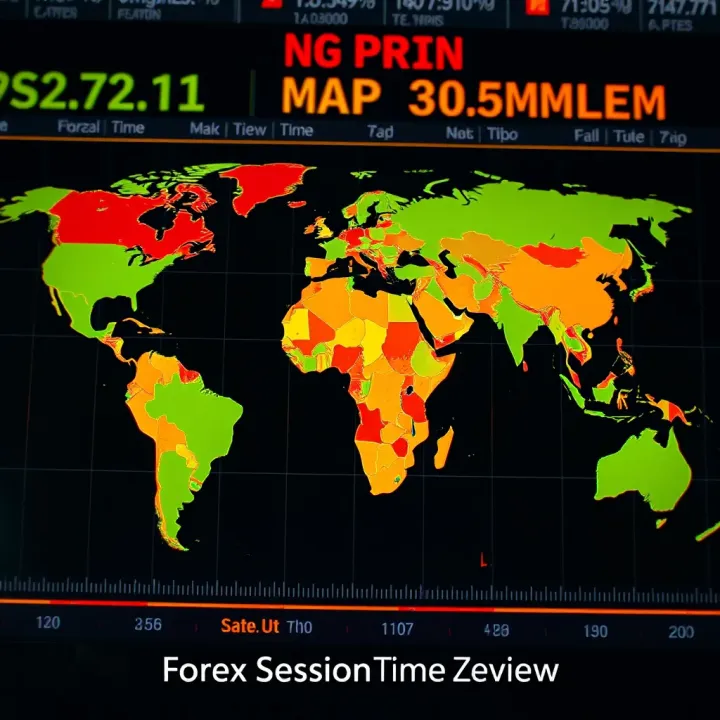
Forex Trading Sessions in Nigerian Time
📈 Know forex trading sessions in Nigerian time (WAT) to trade smartly. Learn peak hours, market opens and closes for Lagos-based traders. Maximise your gains! 🇳🇬
Edited By
Henry Thompson
Forex trading, often called foreign exchange trading, involves buying and selling currencies against one another. For Nigerians keen to grow their savings beyond traditional bank rates or fixed deposits, forex presents an opportunity to tap into global markets daily. Unlike the stock market, forex trades 24 hours on business days, giving traders flexibility to operate outside regular Nigerian market hours.
Understanding the forex market begins with the currency pairs. These pairs consist of two currencies, like USD/NGN or EUR/USD, indicating how much of the second currency you’ll need to buy one unit of the first. For example, if USD/NGN is 415, you need ₦415 to buy 1 US dollar.
While forex trading can offer significant profits, it also carries serious risks, especially from currency volatility and leverage misuse. Nigerian traders should approach the market with clear education and risk management strategies.
The forex market is largely decentralized, operating through a global network of banks, financial institutions, brokers, and retail traders. In Nigeria, most individuals access it via online brokers regulated by international bodies, using platforms like MetaTrader 4 or 5.
Prices are influenced by factors such as:
Economic indicators: inflation rates, interest rates, GDP growth.
Political events: elections, policy changes.
Market sentiment: trader behaviour driven by news or rumours.
Trading forex is not a guaranteed way to make money:
The naira’s volatility can amplify gains or losses.
Leverage can magnify your position beyond your actual funds but can drain your account quickly.
Market manipulation and unreliable brokers exist; always choose reputable brokers with transparent fees.
Educate yourself: Learn the basics from reliable Nigerian financial media or trading courses.
Choose a broker: Look for those who accept Nigerian clients and have solid reviews.
Open a demo account: Practice trading without risking real money.
Start small: Fund your live account with a sensible amount — no more than you can afford to lose.
Use risk management tools: Set stop losses, limit orders to protect your funds.
With proper discipline and realistic expectations, forex trading can become a supplementary income source for Nigerian investors who commit the time to learn and adapt.
Understanding the basics of forex trading serves as the foundation for anyone keen on entering this fast-moving market. Without a solid grip of what forex involves, Nigerian traders risk making costly mistakes or falling prey to scams. The forex market is the largest financial market globally, with a daily turnover exceeding $6 trillion, making it a highly liquid and dynamic space for traders.
Forex, short for foreign exchange, is the global market where currencies are bought and sold. The practical relevance lies in its role in enabling international trade, investment, and travel. For Nigerians, forex trading offers a chance to profit by exchanging the naira against stronger currencies like the US dollar or euro.
Currencies are always traded in pairs because when you buy one currency, you sell another. For example, the USD/NGN pair tells you how many naira are needed to buy one US dollar. Understanding currency pairs helps traders predict price movements and make informed decisions, such as when to enter or exit a trade.
The spot market involves the immediate exchange of currencies at current market rates, commonly used for everyday forex trading by retail traders. On the other hand, futures and options are contracts that give the trader the right or obligation to buy or sell currency at a future date, often used by institutions to hedge risks. For beginners, focusing on spot trading simplifies learning and avoids complexities tied to futures and options.
Forex trading attracts many Nigerians primarily because it offers an alternative to traditional investments like stocks or real estate, especially given the volatility of the naira and inflationary pressures. Nigerians see forex trading as a way to diversify income sources, particularly in an economy where job security can be uncertain.
The potential to earn profits through forex comes from price fluctuations in currency pairs. For example, if a trader buys USD/NGN at ₦480 and the naira weakens to ₦500, the trader can sell back and realise a profit. Besides profit, forex adds diversification, reducing reliance on one asset class and spreading risk.
Thanks to online trading platforms such as MetaTrader, OANDA, and local brokers offering naira accounts, access to forex is easier than ever. Nigerians can start trading with as low as ₦10,000, using mobile phones or laptops, providing flexibility amid busy schedules. These platforms offer demo accounts for practice, real-time charts, and user-friendly interfaces, making them ideal for beginners.
A firm grasp of forex basics not only boosts confidence but also helps avoid costly pitfalls and improves decision-making in real trading scenarios.
Mastering forex terminology is key for any new trader in Nigeria aiming to navigate the market confidently. Understanding terms like pip, leverage, or spread helps you make smarter decisions and avoid costly mistakes. Without grasping these fundamentals, it’s easy to get lost among charts, brokers’ offers, and the fast-moving currency pairs.
Pip, Lot Size, Leverage, and Margin
A pip is the smallest price move a currency pair can make, usually 0.0001 for most pairs. For example, if the USD/NGN rate moves from 410.0000 to 410.0100, it has moved 10 pips. This helps traders measure profit and loss precisely. Lot size refers to the number of currency units you trade; a standard lot is 100,000 units, but brokers often allow mini or micro lots suitable for beginners with smaller capital.
Leverage allows you to control a bigger position than your actual funds by borrowing from the broker. If leverage is 100:1, ₦10,000 can control ₦1,000,000 of currency. However, this also demands margin, which is the amount you must keep in your account to open that position. Margin acts as a security deposit for your trades.
Bid, Ask, and Spread
The bid price is the amount buyers are willing to pay for a currency, while the ask price is what sellers want to receive. The spread is the difference between bid and ask; this is where brokers often make their money. For example, if the USD/NGN bid is 410.05 and the ask is 410.10, the spread is 0.05 Naira. A narrower spread means lower trading costs, which is crucial for traders who make many trades.
Base Currency and Quote Currency
In any currency pair like USD/NGN, the first currency (USD) is the base currency and the second (NGN) is the quote currency. The pair tells you how much of the quote currency is needed to buy one unit of the base currency. So, if USD/NGN is 410, it means ₦410 is required to buy one US dollar. Knowing this distinction helps you correctly interpret price movements and make informed trades.
How Leverage Amplifies Gains and Losses
Leverage is powerful; it can magnify your profits when the market moves in your favour. For example, with 50:1 leverage, a 1% change in currency price may bring a 50% return relative to your invested capital. But the flipside is just as harsh — if the market moves against you by 1%, you could lose 50% of your investment. This makes leverage a double-edged sword that requires careful attention.
Leverage Limits in Nigerian Brokerages
Nigerian regulations and broker policies typically cap leverage ratios to reduce risks for traders. Most brokers here offer between 20:1 and 50:1 leverage, unlike international platforms that might go as high as 400:1. This limitation helps protect Nigerian traders from catastrophic losses but also requires adjustment in strategy compared to high-leverage trading internationally.
Managing Risk with Leverage
Effective risk management when using leverage is vital. Always set stop-loss orders to limit losses and avoid risking more than 1-2% of your trading capital per trade. Start with lower leverage until you’re comfortable and understand how price swings affect your position. Combining good money management, discipline, and education helps prevent leverage from wiping out your account.
Understanding these basic forex terms builds a strong foundation, allowing Nigerian traders to trade responsibly and make smarter moves in the complex forex market.
Getting ready to trade forex in Nigeria involves more than just opening an account. This setup phase determines your experience and potential success in the forex market. It includes choosing a reliable broker, understanding account options, and handling deposits securely. Taking time here prevents problems down the road, such as losing funds to shady platforms or facing unnecessary fees.
Selecting a trustworthy broker is critical. In Nigeria, regulation safeguards traders from fraud and malpractice. Brokers regulated by respected authorities like the Financial Conduct Authority (FCA) or the Securities and Exchange Commission (SEC) Nigeria provide an added layer of security. Without regulation, you risk dealing with unverified companies that might delay withdrawals or manipulate prices.
Popular brokers for Nigerian traders include firms like XM, HotForex, and Exness. These brokers support Nigerian customers with convenient deposit options and local customer service. They also offer platforms well suited for beginners and experienced traders, such as MetaTrader 4 (MT4) and MetaTrader 5 (MT5), which are familiar and user-friendly.
Account types vary to fit different trading needs. For instance, standard accounts allow more flexibility and bigger lot sizes, while micro accounts are suitable for traders starting with smaller capital. Choosing the right account type and platform impacts your trading comfort and control over risks.
Before you can trade, the broker requires Know Your Customer (KYC) verification. This process involves submitting identification documents like a valid national ID, passport, or driver's licence, along with proof of address. KYC ensures compliance with anti-money laundering laws and protects both you and the broker.
When it comes to funding your account in Nigeria, options include bank transfers, USSD banking, and e-wallets such as OPay or Paystack. Bank transfers are straightforward but may take longer due to banking hours and network issues. USSD payments offer quicker access since they only need a phone and mobile network. E-wallets provide fast, secure deposits with instant confirmation.
Understanding transaction costs such as spreads and commissions is essential. The spread is the difference between the buy and sell price of a currency pair. Narrow spreads lower trading costs, which is particularly important for frequent traders. Some brokers may charge additional commissions, while others include costs within spreads. Always compare fees before committing your money to avoid surprises.
Always prioritise regulated brokers with transparent fee structures and convenient Nigerian deposit methods. This foundation helps you trade confidently without unnecessary hurdles or hidden costs.
Setting up correctly saves time and builds trust as you begin forex trading. Practical choices at this stage will influence your overall trading experience and profitability in the ever-changing forex market.
Navigating the forex market requires more than just understanding charts—it calls for sound strategies and solid risk management. Without these, even the most promising trades can end in losses. For Nigerian traders, dealing with unpredictable currency fluctuations and local economic factors makes it vital to have practical methods that help shield capital while aiming for profit.
Trend-following and breakout approaches are straightforward ways to read the market's mood. Trend-following involves identifying a currency pair's direction—whether it’s moving upwards or downwards—and making trades that align with that movement. If the naira is weakening steadily against the dollar, a trader might take a position expecting further depreciation. Breakout strategies look for moments when price breaks through a known support or resistance level, signalling a possible strong move. For instance, if the USD/NGN rate breaks a previous high after a period of consolidation, it could indicate a good entry point.
Using technical indicators effectively helps traders confirm signals and make informed decisions. Popular tools like Moving Averages smooth out price fluctuations to reveal prevailing trends, while the Relative Strength Index (RSI) can warn when a currency pair is overbought or oversold. A beginner might combine these: using a 50-day moving average to spot the trend and RSI to time entries or exits. The key is not to rely blindly on indicators but to use them together with price action for better accuracy.
Demo trading before risking real money serves as a practical rehearsal. Many brokers offer free demo accounts where you can test strategies without risking Naira. This practice allows you to get familiar with trading platforms, understand how orders work, and gauge your reaction to market swings. For example, a beginner trying the trend-following strategy on a demo account can see what happens when the market reverses unexpectedly, preparing them better for real trades.
Setting stop-loss and take-profit orders is a basic yet vital risk control method. By placing a stop-loss, you limit how much you can lose on any trade, automatically closing it if the market moves against you beyond a set point. Conversely, a take-profit locks in gains once the price reaches your target. For instance, if you buy USD/NGN at 460 and set a stop-loss at 455 and take-profit at 470, your maximum loss is capped at ₦5, while your potential gain is ₦10.
Position sizing and capital allocation determine how much of your investment goes into each trade. Instead of risking a big chunk of your ₦100,000 trading capital on a single position, you might limit it to 1–2%, or ₦1,000 to ₦2,000, per trade. This way, a few losses won’t wipe you out. Think of it like buying suya; you don’t use all your money on one stick because the taste might turn sour—you spread your bets for safer enjoyment.
Psychological discipline and avoiding emotional trading remain the hardest skills to master. The forex market’s rapid pace can trigger fear or greed, leading you to close trades early or chase losses. Setting rules beforehand, such as sticking to your stop-loss or taking breaks after a losing streak, helps maintain composure. For Nigerian traders especially, who might be used to the hustle and bustle of daily life, having a calm mindset during trading hours can turn a reckless player into a savvy trader.
At the end of the day, good strategies paired with strict risk management ensure you trade forex not like gambling but like running a business—carefully and wisely.
Forex trading can be exciting, but Nigerian beginners often run into challenges that can stall their progress. Understanding these hurdles is essential to navigate the market effectively and protect your investments. This section focuses on two critical areas: dealing with naira volatility and regulatory restrictions, as well as spotting and avoiding scams by unreliable brokers. Addressing these issues head-on helps you trade safer and smarter in Nigeria’s unique forex environment.
The naira’s value frequently shifts against global currencies, which directly impacts forex traders. When the naira weakens suddenly, your profits or losses can be magnified because your trading account value in naira might change unexpectedly. For example, if you make gains in US dollars but the naira falls sharply, converting your profit back to naira may not yield the expected returns. This volatility adds an extra layer of risk compared to trading in more stable currency environments.
The Central Bank of Nigeria (CBN) plays a key role in forex trading through various policies. Daily forex liquidity restrictions and regulatory interventions, such as exchange rate windows and limits on dollar transactions, affect traders’ access to foreign currency. Such measures aim to stabilise the naira but can sometimes delay or complicate fund withdrawals and deposits for forex activities. Nigerian traders must stay updated on CBN’s announcements to avoid surprises that can disrupt trading plans.
To reduce currency risk, consider using a combination of strategies. One common practice is to maintain part of your forex account in dollar-denominated assets or open an offshore trading account with a credible broker offering multi-currency options. You can also apply hedging techniques by trading pairs less affected by naira swings or using stop-loss orders diligently to limit potential losses from rapid currency moves. Diversifying across different currency pairs helps spread risk instead of concentrating on naira-related pairs alone.
New traders in Nigeria often face the risk of falling victim to sham brokers. Watch out for red flags like unsolicited calls promising guaranteed profits, extremely high leverage offers without clear risk disclosures, or brokers without transparent fee structures. If a broker pressures you to deposit quickly or refuses to provide verifiable licence details, these should raise serious concerns.
Verifying a broker’s credibility is crucial before committing funds. Check if the broker is registered with recognised authorities such as the Securities and Exchange Commission (SEC) Nigeria or international bodies like the Financial Conduct Authority (FCA) where applicable. Read their terms and conditions closely, and test their customer service responsiveness. Legitimate brokers will also offer demo accounts and educational resources to help you learn before you invest real money.
Community feedback is another practical source of insight. Participate in Nigerian forex trading forums and social media groups where traders share their experiences. However, approach online reviews critically, distinguishing genuine testimonials from paid promotions. Official resources including regulatory websites can confirm broker licences, while platforms like local financial news sites often publish warnings about fraudulent operators.
Being informed and cautious is your best defence against forex trading pitfalls in Nigeria. Research well, verify every broker, and prepare for naira volatility to protect your funds.
Navigating these challenges may seem tough at first, but practising due diligence and using smart risk strategies will build your confidence and resilience as a Nigerian forex trader.
📈 Know forex trading sessions in Nigerian time (WAT) to trade smartly. Learn peak hours, market opens and closes for Lagos-based traders. Maximise your gains! 🇳🇬
Explore the benefits of forex trading for Nigerian investors 🌍. Learn about easy access, high liquidity, profit potential, and smart risk management.💹
📱 Find out how to pick the best trading app in Nigeria by comparing features, cost, and security. Make smart choices for your investments today!
🔍 Find the best trading broker in Nigeria with our practical guide! Learn how to pick reliable brokers, compare options, and start trading confidently today.
Based on 8 reviews