

Best Trading Platforms for Nigerian Traders
Discover how to choose the best trading platform in Nigeria 💹 Compare fees, features, market access & security for smarter trading decisions today!
Edited By
George Reynolds
In Nigeria, payments have widened far beyond the old-fashioned cash exchange. While cash remains king in many areas, especially in rural markets and small businesses like mama puts, more Nigerians are warming up to digital and electronic payment methods. For traders, investors, and financial analysts, understanding these payment options is vital — not only for convenience but also for reducing costs and enhancing security.
Cash transactions are immediate and familiar to most Nigerians, especially for quick trades in markets, barbing salons, or daily purchases in danfo buses. However, cash carries risks such as theft, counterfeit notes, and lack of transaction records. Its dominance lessens in formal sectors but continues strong where digital infrastructure is limited.
Unstructured Supplementary Service Data (USSD) codes enable transactions via simple mobile phones without internet. Banks like GTBank and Access Bank provide USSD platforms for transfers, bill payments, and airtime purchases. USSD is affordable and widespread, especially outside major cities but less secure if users share their PIN carelessly.
Mobile banking apps offer richer features on smartphones, allowing instant transfers, loan access, and account management. With apps from Zenith Bank, First Bank, or fintechs like Kuda and Piggyvest, users enjoy greater convenience but depend on internet access and stable electricity.
Fintech companies such as Paystack, Flutterwave, and OPay have reshaped payments by integrating multiple channels like bank cards, mobile money, and digital wallets. Their platforms support businesses in accepting online payments easily, a big boost for e-commerce on Jumia Nigeria or Konga.
These services highlight security measures like two-factor authentication and encryption, but charges on transactions vary. For investors, fintech innovations present both opportunities for growth and considerations on regulatory compliance.
Understanding the strengths and weaknesses of each payment method helps traders and investors choose the best option for their needs, balancing cost, security, and accessibility in a Nigerian context.
Cash: Immediate, low-tech, but risky and limited in record-keeping
USSD: Accessible on all feature phones, inexpensive, but vulnerable if PIN is exposed
Mobile Banking Apps: More features, requires internet and smartphone
Fintech Platforms: Seamless integration, broad acceptance, but transaction fees may apply
Knowing when and how to use each payment type ensures smoother transactions and better financial management in today’s Nigerian economy.
Cash remains a lifeline for many Nigerians, especially for daily transactions in both urban and rural settings. In cities like Lagos and Abuja, you'll find that paying with cash at markets, local shops, and transport options such as danfos and okadas is still very common. This extends to rural areas where digital payment infrastructure is limited, making cash the most reliable method for buying essentials at mama puts or paying school fees in smaller towns.
However, handling cash involves risks and logistical challenges. Security concerns are significant, with frequent reports of theft from traders carrying large sums, or during transit from markets to banks. Transporting cash, especially in remote areas, can be risky and costly. This also affects logistics for banks and ATMs, where cash shortages or malfunctions are frequent. These issues underscore why some prefer electronic payments where possible.
The informal sector profoundly depends on cash transactions. Many small-scale businesses, artisans, and roadside traders operate outside the formal banking system and largely transact with cash. This cash dependence supports quick, straightforward payments without the need for bank accounts or digital devices. Nevertheless, it limits these businesses' ability to scale or access credit facilities, tightening their operational constraints.
Inflation and the fluctuating naira exchange rate complicate cash handling. Rising prices mean that the same amount of cash holds less buying power over time, nudging consumers and traders to either charge higher prices or seek alternative payment methods to preserve value. For example, a market stall selling tomatoes last year for ₦500 might charge ₦1,000 today due to inflation, but customers paying cash feel the pinch instantly.
During ember months – September to December – cash shortages become more noticeable. Higher demand for cash arises from festive spending, salaries, and bonuses, yet banks and ATM networks struggle to supply enough physical currency. This squeeze leads to long queues at ATMs, increased electronic payments where available, and sometimes higher transaction fees for cash withdrawals. Traders who rely on daily cash sales face the challenge of managing limited liquidity while meeting customer demands.
Despite the rise of digital payments, cash remains deeply ingrained in Nigeria’s economic fabric due to infrastructural gaps, cultural habits, and informal sector reliance, but its handling is increasingly complicated by inflation and seasonal liquidity challenges.
Understanding these cash dynamics is vital for traders and investors assessing Nigeria’s payment landscape. It highlights where cash continues to dominate and where fintech solutions may grow to fill gaps efficiently and securely.
Bank transfers and Electronic Funds Transfers (EFT) have become foundational in Nigeria’s payment ecosystem, especially for traders, investors, and financial analysts who require reliable and efficient transaction methods. These digital payment solutions enable participants in Nigeria's complex financial landscape to move funds with minimal physical contact, saving time and reducing the risks linked to cash handling.
Bank transfers in Nigeria are mostly conducted via platforms like USSD codes, online banking websites, and mobile banking apps provided by institutions such as GTBank, Zenith Bank, and Access Bank. USSD (Unstructured Supplementary Service Data) remains popular because it works on almost all types of phones without internet access, allowing traders in rural areas or regions with poor connectivity to send or receive money easily. Meanwhile, online banking and mobile apps offer more features—like scheduled transfers and account management—but they require smartphones and stable internet connections, mostly found in urban centres.
Transfer limits and fees differ across these platforms and banks. Most banks cap daily transfers through USSD at about ₦100,000 to ₦500,000 to mitigate fraud risks, while online and mobile app transactions can reach higher limits depending on the account type and customer risk profile. Fees often include a flat charge for small transfers or a percentage-based fee for larger sums, sometimes up to 1%. These charges can add up for businesses making multiple payments, so understanding your bank’s fee structure and plans is crucial for budgeting and cash flow management.
EFTs offer speed and traceability, which are invaluable to business operations. Transfers initiated via bank platforms often reflect within seconds or minutes, allowing for quicker settlement of debts, purchases, and payrolls. The traceability aspect means that every transaction generates a record, simplifying audits and financial reconciliation.
However, these services are not without challenges. Network downtime, whether from telco providers or banking systems, disrupts transactions and can delay payments during critical business periods. Bank charges—especially for cross-bank transfers—can be prohibitive, cutting into profit margins for traders working with thin margins. These issues necessitate contingency plans like maintaining adequate liquidity in multiple accounts or using alternative payment channels.
The Nigerian Inter-Bank Settlement System (NIBSS) plays a key role in enabling EFTs by providing infrastructure that interlinks banks to process electronic payments securely and efficiently. NIBSS ensures transactions are cleared and settled in real-time or near real-time, supporting the Central Bank of Nigeria’s push towards a cashless economy. This interbank connectivity drives volumes in EFT usage, promoting financial inclusion as payments become seamless across regions and banking institutions.
For businesses and investors, understanding the nuances of bank transfer platforms and their operational challenges can greatly influence the efficiency of financial operations in Nigeria.
Mobile money and fintech platforms have become indispensable in Nigeria's payment ecosystem. They offer alternatives to traditional banking, especially valuabe for those outside the formal financial sector. These solutions reduce the friction of cash-based payments and enhance financial inclusion by providing fast, digital access to money and services.
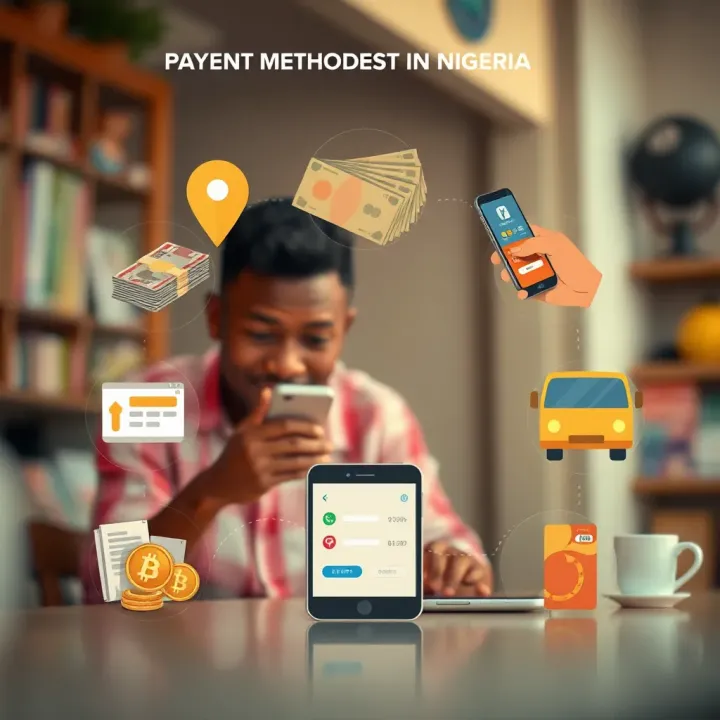
Nigeria hosts several notable mobile money providers including OPay, PalmPay, and Paga. OPay, for instance, has carved out a significant market due to its array of services ranging from money transfers to bill payments and airtime purchases. PalmPay, backed by Transsion Holdings, offers cashback incentives that have attracted millions of users, helping to deepen mobile money penetration. Paga focuses on usability, especially for customers in semi-urban and rural communities, providing simple USSD codes and app options for transactions.
These providers target different markets but share one goal: bringing financial services closer to people who may not have ready access to banks. Mobile money's reach extends beyond Lagos and Abuja into smaller towns and villages, helping to bridge Nigeria's significant urban-rural divide in financial access.
Mobile payments are popular largely because of their ease of access. You do not need a bank account to use some mobile money services; a mobile phone alone suffices. Transaction costs tend to be lower compared with bank transfers or traditional POS systems, which is crucial for low-income users and informal traders.
Security is also a strong point. Mobile platforms typically use PINs and biometric verification to protect accounts. Many providers run fraud detection systems that flag suspicious activity quickly. Mobile money reduces the risk of carrying cash, which can be lost or stolen, especially in busy markets or during daily commuting.
Integration with banking services enhances convenience further. Many fintech players link mobile wallets to traditional bank accounts, allowing seamless transfers between them. This integration lets users withdraw cash easily from bank ATMs or agents, top-up wallets, and even access loans or savings products directly through their mobile device.
Despite these benefits, mobile money adoption faces hurdles. Regulatory clarity remains a problem; customers sometimes hesitate due to uncertainty about consumer protection laws or dispute resolution mechanisms. Instances of dormant or frozen accounts without clear recourse prevent full confidence.
Infrastructure challenges also limit growth. Network outages and weak internet connectivity in remote areas can halt transactions or delay confirmations. Cash-out remains a concern where agents are scarce or unwilling to disburse funds promptly, forcing users back to cash-based methods.
Mobile money platforms offer real solutions to Nigeria's financial gaps but still need regulatory support and better infrastructure to achieve full impact.
Mobile money has grown fast because it fills practical needs unmet by banks. Traders, investors, and financial analysts watching Nigeria's dynamic economy should recognise its role as a driver of convenience and inclusion, despite ongoing obstacles. Understanding these nuances helps evaluate the future trajectory of payments in the country.
Card payments have steadily become a key method for retail transactions across Nigeria, particularly in urban centres and busy markets. Their relevance is evident as more Nigerians, both consumers and traders, adopt cards over cash for security and convenience. This shift is supported by the growing deployment of Point-of-Sale (POS) terminals in shops, supermarkets, and even some street markets.
There are three main types of payment cards in Nigeria: debit, credit, and prepaid cards. Debit cards, linked directly to bank accounts, remain the most common. They allow users to pay instantly from their available funds, making budgeting easier. Credit cards, while less popular due to limited acceptance and higher costs, offer short-term borrowing, which some middle-class Nigerians use for larger purchases or emergencies. Prepaid cards are growing among young Nigerians and those without full bank accounts, as they can be loaded with a fixed amount and used for both online and offline payments.
POS terminals play a vital role in enabling card payments across Nigerian retail. These devices are now common not only in supermarkets and malls but also in smaller shops and roadside stalls, like mama puts selling suya or jollof rice. This widening availability allows traders to tap into the cashless trend, reducing the risks and costs of handling cash. For customers, POS terminals offer flexibility; making payments with debit or prepaid cards is faster and safer than carrying large sums of cash, especially in busy cities like Lagos or Abuja.
EMV chip technology, now standard on most Nigerian-issued payment cards, enhances security by generating unique transaction codes each time the card is used. This prevents copying of card details, a common risk with magnetic stripe cards. In addition, contactless payments using Near Field Communication (NFC) enable quick and hygienic purchases without inserting the card, which became particularly useful during the Covid-19 pandemic and remains popular in urban shopping malls.
Despite these technological advances, fraud remains a concern. Common tactics include card skimming at POS machines, where criminals install devices to capture card information. Phishing scams via phone calls or SMS also trick some users into revealing PINs and other sensitive data. Nigerian banks and the Nigerian Inter-Bank Settlement System (NIBSS) have introduced protective measures such as transaction alerts via SMS and 3D Secure authentication for online purchases. Still, customers should remain vigilant by checking for tampered machines, regularly monitoring their bank statements, and never sharing their PINs or OTPs with others.
Card payments backed by secure POS systems are transforming retail in Nigeria, but both consumers and traders must keep alert against common fraud risks to fully benefit.
The expansion of card usage combined with secure POS terminals is a positive step towards financial inclusion and cashless transactions in Nigeria. Traders who adopt these technologies can expect smoother sales processes and reduced cash handling worries, while consumers enjoy safer, more flexible payment options.
Digital wallets and online payment platforms have grown into vital tools within Nigeria's evolving payment ecosystem. These solutions offer a blend of convenience and security that traditional methods often struggle to match, particularly for businesses and consumers involved in e-commerce or frequent digital transactions. With increasing internet penetration and smartphone usage, platforms like Paystack and Flutterwave have notably transformed payments, allowing swift, secure money transfers and sales across various sectors.
Paystack and Flutterwave stand out as the frontrunners in Nigeria's digital payments space, especially within e-commerce. Their platforms enable merchants—from small online stores to larger retailers—to receive payments locally and internationally with ease. These services integrate with major Nigerian banks and card schemes, simplifying the checkout process and reducing friction for buyers. For traders and investors, they open doors to broader markets and better cash flow management.
Integration with bank accounts and cards is a key feature of these platforms, giving users the flexibility to fund wallets or withdraw directly to their bank accounts. This seamless connection means that customers can pay using debit or credit cards, or even bank transfers, without leaving the app. For businesses, it cuts down reconciliation time and mitigates errors that often arise from manual payment tracking.
For both consumers and businesses, digital wallets bring unmatched convenience when settling bills or managing subscriptions. Consumers can pay electricity, water, and internet bills directly through apps like Pocket by Piggyvest or Kuda, bypassing the queues and long waits traditionally associated with these services. Likewise, businesses benefit from prompt payments and automated billing, which boost their cash flow and reduce the risk of defaults.
However, challenges persist, notably with acceptance and network reliability. While adoption is rising in urban centres, some retail and service outlets still prefer cash, limiting full utilisation of digital wallets. Network downtimes—common during peak hours—can interrupt transactions, affecting trust in these platforms. Still, as infrastructure improves and merchants become more accustomed to electronic payments, these issues should diminish.
Digital wallets provide a practical bridge between traditional cash handling and the digital economy, offering traders and investors faster, safer ways to conduct business across Nigeria's varied market landscape.
By understanding how these platforms operate and their limitations, businesses and consumers can better navigate payments and reduce operational risks.
Alternative payment methods are gaining ground in Nigeria as financial technology evolves and consumers seek more flexible, convenient options beyond cash and traditional bank transfers. These methods matter because they often provide faster transactions, better access to credit, and enhanced user experiences, especially in urban and semi-urban areas. For traders, investors, and financial analysts, understanding these options helps in spotting growth opportunities and assessing market risks.
Nigeria has seen a steady rise in cryptocurrency use despite unclear regulatory boundaries. While the Central Bank of Nigeria (CBN) restricted banks from facilitating crypto transactions since 2021, peer-to-peer trading and blockchain-based payments remain popular among tech-savvy Nigerians and small businesses seeking alternative value stores and remittance paths. Cryptocurrencies like Bitcoin and Ethereum serve as accessible ways to bypass naira volatility and transfer value internationally without heavy fees.
However, this space carries risks. Price volatility can lead to significant losses, and regulatory uncertainty makes crypto investments vulnerable to sudden restrictions. Scams and fraud also plague the sector as inexperienced users fall prey to fake exchanges and wallet providers. Still, blockchain’s underlying technology offers real benefits, such as faster cross-border payments and improved transparency, which Nigerian fintech companies are beginning to explore for payments and supply chain traceability.
Buy Now, Pay Later (BNPL) is trending in Nigerian retail, letting customers acquire goods immediately while paying in instalments over a short period. Platforms like Paylater and Carbon have expanded access to credit by scoring users through data rather than traditional credit checks. This popular model has boosted sales in e-commerce and physical stores, especially for electronics and fashion.
The risk here lies in consumer protection gaps. Without stringent credit controls, customers might overextend finances, facing high-interest charges and penalties. Traders and investors should watch the rising credit risk portfolios of BNPL providers and the potential for increased bad debts. Nonetheless, BNPL offers financial inclusion for many who lack formal loans, making it a noteworthy trend.
Contactless and QR code payment options have grown fast in Nigerian cities. Places like Ikeja City Mall and Lagos Island markets now frequently accept payments through apps like OPay and Quickteller, where customers scan QR codes to pay instantly with linked bank accounts or wallets. This method reduces cash handling, thereby increasing hygiene and cutting transaction time.
The key limitation is infrastructure. Both merchants and consumers need smartphones with internet access, and consistent power supply is essential to keep devices and terminals running. Moreover, network downtimes can disrupt payments. Despite these challenges, contactless payments are steadily becoming a favourite for busy urban Nigerians seeking quick transactions without queuing or fumbling for cash.
Alternative payment methods reflect Nigeria's dynamic financial environment. Traders and financial analysts should keep track of these trends to understand shifting consumer behaviours and emerging risks.
Choosing the right payment method is not just about convenience; it directly affects how secure, cost-effective, and accessible your financial transactions are. In Nigeria's diverse economic setting, where options range from cash to digital wallets and mobile money, selecting a suitable payment method can influence your business efficiency and personal financial safety.
Taking time to understand your needs saves you from hidden costs and security headaches. For instance, a trader in Lagos might prefer POS payments for ease and record-keeping, while a rural craftsman could rely more on mobile money due to limited bank presence.
Transaction fees vary widely across payment platforms. Bank transfers might charge fixed or percentage fees, especially for large sums or interbank transfers, while platforms like Paystack and Flutterwave typically charge merchants a small fee per transaction. On the other hand, cash payments involve no direct fees but carry costs related to handling, such as transportation risk or counterfeit currency.
Some digital wallets or BNPL (Buy Now, Pay Later) services add charges for quick cash-outs or late payments. It’s crucial for users to scrutinise these fees upfront. For example, a trader accepting USSD payments should compare charges across their bank's USSD codes to avoid losing funds to fees that add up over time, especially in high-volume transactions.
Security is a key consideration amid rising cybercrime and fraud in Nigeria. Many banks and fintech services deploy two-factor authentication (2FA), biometric verification, and fraud monitoring. EMV chip-enabled POS cards reduce risks compared to magnetic stripe cards.
However, not all services maintain the same standards. Mobile money users must beware of scams involving fraudulent USSD codes or SIM swaps. Choosing a method backed by strong security protocols and actively supported by regulatory bodies like the Central Bank of Nigeria (CBN) enhances protection.
Accessibility varies starkly between urban and rural parts of Nigeria. While Lagos and Abuja boast numerous POS terminals and reliable internet for digital payments, remote communities may depend chiefly on cash or mobile money services like Paga or OPay.
Consider the infrastructure and network reliability in your area. If intermittent electricity and poor network coverage plague your location, relying heavily on online payment platforms can lead to failed transactions and customer frustration. Sometimes, blending methods for redundancy ensures smoother operations.
Before sending money or making payments, especially online, verify the credibility of the merchant or service provider. Look for contact details, customer reviews, and formal registration where possible.
Cross-checking information minimises the risk of falling victim to scams. For example, when buying tokunbo electronics online, confirming the seller’s physical address or registered business name provides a safety net.
Safeguarding your personal information is vital. Avoid sharing sensitive details like PINs or passwords over calls or SMS. Use secure passwords and change them regularly.
Public Wi-Fi hotspots common in markets or cafes should not be used for financial transactions, as data interception risks increase. Fintech apps with biometric verification help reduce data misuse risks by tying accounts firmly to the user.
Maintain clear records of all transactions, whether receipts, bank statements, or screenshots. This practice aids in tracking expenses, resolving disputes, and serves as proof when reporting fraud.
For small business owners, consistent bookkeeping including digital payment slips and cash logs can support smoother tax filing with FIRS or state tax authorities, avoiding penalties or confusion during audits.
Thoroughly weighing security, costs, and access helps avoid unnecessary losses and builds trust in transactions. Nigerian traders and investors who manage their payments smartly position themselves for greater financial stability and growth.
Discover how to choose the best trading platform in Nigeria 💹 Compare fees, features, market access & security for smarter trading decisions today!

Find the right broker in Nigeria for stocks, forex, & more 📈. Learn how to evaluate fees, platforms, regulation, & support to boost your investments.

Looking for a trustworthy forex broker in Nigeria? Discover key tips on regulations, platforms, fees, & support to trade confidently 📊💼🔍
📈 SmartTrader equips Nigerian traders with tailored tools and strategies to trade smarter, boosting profits and navigating the ₦ markets with local insights for real success.
Based on 6 reviews