

Understanding Derivative Brokers in Nigeria's Markets
Explore how derivative brokers bridge investors to Nigeria's futures and options markets, guiding through regulations, risks, and tips for smart trading 💹🔍
Edited By
James Thornton
In mathematics, understanding derivative signs is key, especially if you want to grasp how functions behave over time or value changes. Traders, investors, and financial analysts often rely on derivatives to predict market trends, gauge risks, and make sound decisions. The derivative, simply put, measures how a function changes as its input changes—it’s about the rate of change.
At its core, the derivative sign tells us whether a function is increasing, decreasing, or staying steady in a given interval. A positive derivative indicates the function is rising, while a negative value signals a decline. When the derivative is zero, the function may be at a peak, trough, or flat point.
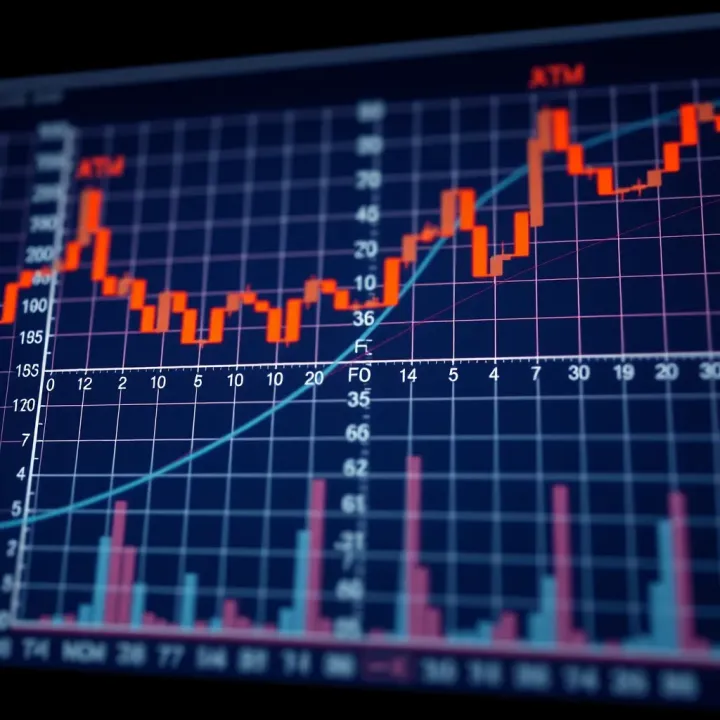
This concept plays out concretely in stock market analysis, for example. Suppose the price of a stock over time is modelled by a function P(t). Calculating P'(t)—the derivative of price with respect to time—can show whether the stock price is gaining or losing value at any moment. Understanding these signs helps in timing buys or sells, managing portfolios, and minimising loss.
f'(x): Pronounced "f prime of x," shows the first derivative of function f at point x.
dy/dx: Leibniz notation, displaying the rate of change of y with respect to x.
d/dx (f(x)): Represents the derivative operator applied to f(x).
In practice, these notations serve the same purpose but the choice depends on context or preference. For instance, in financial modelling software, you might encounter any of these depending on the tool or platform used.
The derivative sign isn’t just a symbol — it reveals the pulse of changing quantities, be it prices, interest rates, or even commodity demand.
By grasping these notations and recognising what positive, negative, or zero derivatives mean, financial professionals can interpret market conditions more clearly. As you go further into differentiation, you’ll see these signs illuminate behaviours like acceleration, turning points, and volatility—vital information for anyone serious about market analysis in Nigeria or beyond.
Derivatives are fundamental in understanding how quantities change, especially in fields like trading, investment, and financial analysis. Knowing the basics of derivatives—and the signs they carry—allows you to predict trends and make smarter decisions. For example, if the derivative of a stock price with respect to time is positive, it usually means the stock is gaining value at that moment. Conversely, a negative derivative suggests the price is falling.
Understanding these basics helps traders identify when to buy or sell assets, and investors can assess whether an economic indicator is improving or deteriorating. This section breaks down what derivatives represent and explains the common notations used, so you get a solid grip on interpreting these vital signals.
In maths, a derivative shows how a function’s output changes as the input changes. Think of it as the speedometer for a car, but instead of speed, it measures the rate of change of anything from stock prices to production costs. If a function describes the price of a commodity over time, its derivative tells you how fast the price is moving up or down at any point.
This rate of change is essential for analysing trends and predicting future outcomes. In financial markets, for example, knowing whether the rate of change is speeding up or slowing down can guide your trading strategy. The derivative captures both the direction and the degree of change, which can’t be seen just by looking at raw data.
Leibniz notation is one of the most popular ways to express derivatives. It shows the derivative as a fraction: dy/dx, where 'y' is the dependent variable and 'x' the independent one. This notation is especially useful in economics and finance, where variables often change with respect to time or price.
For example, if y represents revenue and x stands for advertising spend, then dy/dx shows how revenue changes as you increase your advertising budget. It helps you quantify the effect of one variable on another clearly and practically.
Lagrange's prime notation is more concise and often used in pure maths and engineering. If you have a function f(x), its first derivative is written as f'(x). This notation is handy when dealing with multiple derivatives because it simplifies expressions without losing clarity.
For instance, in portfolio analysis, if f(t) models portfolio value over time t, then f'(t) indicates how fast your portfolio grows or shrinks at a specific moment. It's a quick way to refer to the rate of change without writing the full derivative expression every time.
Euler introduced the operator D to represent differentiation: D(f) means the derivative of the function f. This style is very practical for higher-level maths and when dealing with differential equations, which often arise in modelling financial risk or physical systems.
Using D, you can write multiple derivatives succinctly, for example, D²(f) for the second derivative. In a trading context, the second derivative can indicate acceleration or deceleration in price movements, helping analysts spot momentum shifts early.
Knowing these notations lets you read and express derivative signs confidently, making mathematical analysis effective for real-world trading and investment decisions.
By mastering the basics of derivatives and their signs, you set a strong foundation for interpreting changes, forecasting trends, and optimising your financial strategies.

Understanding whether a derivative is positive, negative, or zero matters a lot, especially in financial markets where price movements and trends dictate decisions. Traders and investors rely heavily on the sign of derivatives to estimate how a stock price or economic variable is changing at any moment. For example, a positive derivative in a stock's price suggests the price is rising, signalling a potential opportunity to buy or hold. Conversely, a negative derivative warns that prices may be dropping, often prompting selling or caution.
A positive derivative means that the function—in this case, often a price or value—is increasing with respect to its independent variable, usually time. In practical terms, if a trader analyses the price of a commodity like crude oil and finds the derivative of its price function is positive, it signals the price is on an upward trend. This information helps in deciding whether to enter or add to a position. Think of it like the speedometer in a car: moving forward steadily means the price is gaining momentum.
On the other hand, a negative derivative indicates the function is decreasing. For investors, this suggests value is falling, which might mean it is time to exit or reassess the investment. Take, for instance, a local startup whose revenue function shows a negative derivative; this points to declining earnings over time and could be a red flag for stakeholders. Negative derivatives also help risk analysts in forecasting downturns or spotting when market corrections are underway.
Sometimes, the derivative equals zero, marking critical points where the function’s value stops increasing or decreasing momentarily. These points often correspond to local maxima or minima—or flat points—important in optimising decisions. For example, if the profit function of a business reaches a point where its derivative is zero, this often represents maximum profit. Nigerian businesses, especially those in the informal sector, can use such analysis to know when to scale operations or pause.
Recognising zero-derivative points assists you in timing exits, entries, and recognising turning points in price or value trends.
In summary, interpreting derivative signs is vital for understanding how functions behave, especially in trading and investment. Positive means rising, negative means falling, and zero points are where the trend shifts. This knowledge helps in making informed, timely decisions market-wise or in business operations.
Understanding how derivative signs inform us about a function’s behaviour is fundamental for financial analysts and traders who rely on precise data to make decisions. Derivative signs help pinpoint when a function—like a stock price or economic indicator—is rising, falling, or reaching critical points, which can translate directly to profit opportunities or risk assessment.
A function's derivative sign reveals whether the function is increasing or decreasing over a specific interval. When the derivative is positive, the function rises; when negative, it falls. For instance, if the price of a commodity’s futures contract shows a positive derivative over the past week, it means prices are climbing, suggesting a buying opportunity. Conversely, a negative derivative signals a downtrend, prompting traders to consider selling or risk hedging. This understanding simplifies spotting trends in market graphs.
Turning points occur where the derivative equals zero, highlighting where a function changes direction. These points can be local maxima or minima—essential for spotting potential peaks or troughs in share prices or exchange rates. For example, if a company’s revenue growth rate slows to zero growth, analysts should check for a local maximum, indicating the possibility of a peak in earnings before a decline. Distinguishing such points helps investors decide when to enter or exit positions.
The second derivative’s sign teaches us about the function’s concavity—whether it bends upward or downward. A positive second derivative indicates concave up, often representing acceleration, while a negative value shows concave down, meaning deceleration. Consider a market index whose price acceleration is positive; confidence may grow as upward momentum strengthens. Meanwhile, a negative second derivative warns of slowing momentum despite rising prices, signalling caution. Traders who combine first and second derivative signs gain a fuller picture, aiding in timing trades more effectively.
Derivative signs don’t just describe function movement; they help decode how price or data shifts happen, enabling sharp, data-driven decisions.
By mastering how to read these signs, financial professionals can better detect trends, turning points, and momentum changes, improving forecasting accuracy and ultimately guiding smarter investment choices.
Understanding how derivatives behave is more than just academic for many Nigerians; it plays a critical role in areas like business, engineering, and education. The sign of a derivative gives immediate insight into trends, optimisations, and turning points, which are all vital in practical decision-making. Grasping these applications makes the concept relevant and helps in solving real problems commonly faced locally.
Derivatives help businesses in Nigeria determine where their profit peaks by studying how the profit function changes with sales or production level. When the derivative of a profit function shifts from positive to negative, it signals the maximum profit point. For example, a textile company in Lagos can use this information to decide how many shirts to produce before costs outweigh revenue gains, ensuring they don't overspend on raw materials.
Sales numbers fluctuate, and derivatives help managers interpret this behaviour. A positive derivative implies growing sales, while a negative one warns of decline. Nigerian SMEs, such as those selling agricultural products, can use these signals to adjust marketing strategies early, avoiding losses or seizing growth periods effectively.
In engineering projects like bridge construction or vehicle design, measuring speed and acceleration is based on derivatives of position over time. For instance, a Nigerian mechanical engineer might analyse how an okada changes speed along a bumpy road, using the first derivative for speed and the second for acceleration, to design safer helmets or improve bike suspensions.
Manufacturers often deal with limited resources. By applying derivatives, production managers can find the point where resource input yields the most output before diminishing returns begin. Nigerian factories producing cement or beverages use these calculations to balance fuel, labour, and materials efficiently, saving costs in a country where energy prices can be unpredictable.
Students preparing for WAEC and JAMB exams must understand how to interpret derivative signs to solve calculus questions accurately. Questions might ask them to identify intervals where a function increases or decreases based on the derivative's sign. Failing to grasp this can lead to mistakes, as seen in exams frequently scored by students struggling with optimisation or growth problems.
A strong grasp of derivative signs can simplify many calculus challenges. Students should practice recognising when a positive derivative implies rising curves and when negatives mean falling trends. Relating these signs to graphs helps bridge the gap between theory and practical understanding. Continuous practice using Nigerian-themed problem sets — say, predicting fuel consumption trends or analysing sales data — boosts familiarity and confidence.
Mastering derivative signs connects classroom theory directly to real-world challenges, helping Nigerian professionals and students alike make smarter decisions with confidence.
Know when to apply derivatives in your field — whether business forecasts or engineering calculations.
Use the sign to pinpoint increasing or decreasing trends quickly.
Practice problems from Nigerian exams to avoid common pitfalls.
This practical insight transforms abstract calculus into a powerful tool across Nigeria's sectors.
Understanding derivative signs is essential for traders, investors, or financial analysts, especially when assessing market trends and price movements. However, several common mistakes can lead to misinterpretation, potentially causing wrong investment decisions or flawed analysis. Below, we highlight key pitfalls and how to avoid them.
A frequent error is mixing up a negative derivative with a negative value of the function itself. The derivative measures the rate of change of a function, not its current value. For instance, a stock price might be ₦500 and decreasing—that means the derivative (rate of change) is negative. But the price remains positive. Conversely, a derivative could be negative even when the price crosses zero or is negative (in theoretical models). Traders must remember that a negative derivative signals a downward trend, not a negative price.
Consider a share price function f(t). If f'(t) 0 at time t, the share price is falling at that moment—not necessarily below zero. Misreading this confuses trend analysis and may cause premature selling or buying decisions.
Functions often have restrictions on where derivatives exist or are valid. In financial markets, price data might only be available on certain trading days, or a derivative’s application can fail near singular points. Ignoring these domain restrictions leads to wrong conclusions.
For example, if exchange rate data is missing for a public holiday, calculating the derivative without acknowledging this gap may suggest sudden price jumps or falls. Analysts should always check the domain over which the derivative applies and consider any breaks or discontinuities.
Also, some functions are not differentiable at sharp corners or jumps—often seen in option pricing models during expiry dates. Understanding where derivatives are defined helps avoid faulty interpretations.
While the first derivative tells you about the direction of change (increasing or decreasing), higher-order derivatives provide deeper insight into the function's behaviour—such as acceleration or concavity. Ignoring these can limit analysis quality.
For example, the second derivative indicates whether a price trend is accelerating or slowing down. If the second derivative is positive, the price decline might be easing, suggesting a possible reversal soon. Financial analysts who don't consider this might miss early signals for market shifts.
Practical Tip: Use second and even third derivatives to confirm trends and turning points rather than relying solely on the first derivative's sign.
In summary, avoid these common mistakes by clearly distinguishing between value and rate of change, respecting domain limits, and factoring in higher-order derivatives. Doing so will improve your ability to interpret derivative signs accurately and make smarter decisions based on sound mathematical understanding.
Explore how derivative brokers bridge investors to Nigeria's futures and options markets, guiding through regulations, risks, and tips for smart trading 💹🔍

Explore the fundamentals of binary implementation 🧮, learn how binary data powers computing 💻 and programming 🚀, and see its role in everyday tech use 🔧.

Learn how to pick trusted trading brokers in Nigeria 🇳🇬, understand their fees 💸, platforms 💻, and regulation 🔍 to safely grow your investments ₦ in the ember months.
📈 Learn how continuation patterns help predict market trends for smarter trading in Nigeria. Master key patterns to boost your chances of winning in forex and stocks.💹
Based on 14 reviews