
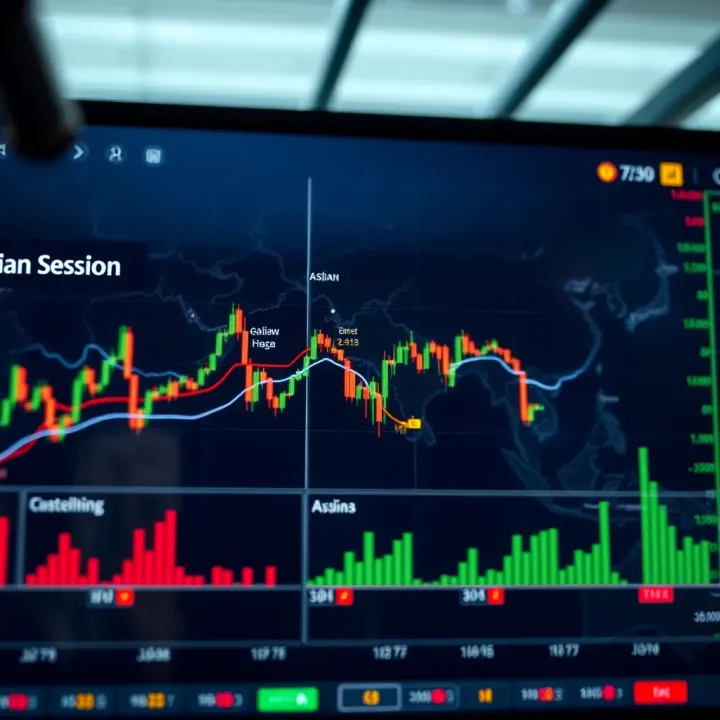
Asian Forex Trading Session Explained for Nigerians
📈 Get insight on the Asian forex trading session's hours, volatility, and liquidity, plus smart tips for Nigerian traders to tap into this global market effectively from Lagos to Abuja.
Edited By
Thomas Richards
The Asian session marks one of the three main periods in the 24-hour forex market cycle. It starts at 7:00 pm WAT and ends by 4:00 am WAT, aligning with the opening and closing of major Asian financial centres like Tokyo, Hong Kong, and Singapore. This session often sets the tone for the day’s trading, as key economic data and announcements from Asia influence currency movements.
Unlike the European or US sessions known for high volatility, the Asian session tends to have lower liquidity but still causes significant moves, especially in currency pairs involving the Japanese yen (JPY), Australian dollar (AUD), and New Zealand dollar (NZD). For example, during Asian market hours, the USD/JPY pair often sees marked price changes as bank activities and economic reports from Japan come into play.
The Asian trading session offers unique trading opportunities due to its timing and the specific currencies it influences, making it crucial for traders looking to diversify their entry points.
Tokyo Stock Exchange: The largest market in the session, influencing JPY pairs heavily.
Hong Kong Monetary Authority: Impacts the Hong Kong dollar and links to the Chinese yuan (CNY).
Singapore Exchange: A hub for forex and commodities trading.
Liquidity is generally thinner during this session, leading to less frequent but sometimes sharper price movements when market news break out. Traders need to watch for sudden volatility spikes, especially around economic releases like Japan’s Tankan survey or Australia's employment figures.
Nigerian traders, often balancing between local market hours and international forex windows, can take advantage of the Asian session's patterns. Since it starts during the late evening in Nigeria, it provides a quiet period to plan or execute trades involving Asian currencies, with usually tighter spreads on pairs like AUD/USD or USD/JPY.
Understanding this session helps in timing trades better, especially if your strategy focuses on trend-following or breakout trading. Knowing the typical price behaviour during these hours can prevent entering trades during false moves caused by low liquidity.
In sum, the Asian session is not just a quiet background; it shapes significant moves in the forex market, particularly for Asia-linked currencies. Nigerian traders can turn this to their advantage by recognising when and how to engage with the market during these hours.
The Asian forex trading session marks the start of the global forex market activity for the day. Its importance lies in setting the initial tone for price movements and liquidity, especially for currency pairs linked to Asian economies. For traders, understanding this session helps in identifying less volatile periods as well as potential breakout opportunities before European and American sessions begin. In practical terms, this knowledge allows investors to adjust their strategies, balancing risk and opportunity effectively.
The Asian forex session typically runs between 12:00 am and 9:00 am West Africa Time (WAT). These hours correspond with active trading in Asian financial hubs like Tokyo, Singapore, and Hong Kong. For Nigerian traders, recognising these times is crucial to fitting trading activities around work or personal schedules, given the early hours involved.
Compared to the European and American sessions, the Asian session tends to have lower trading volumes and liquidity. This results in less volatility, making it more suitable for strategies like scalping or range trading. However, it also means fewer large price swings, so traders expecting rapid moves may need to plan accordingly. The European session usually picks up after, with more intense activity, while the American session often brings the highest volatility.
Tokyo stands as the central player during the Asian session, driving the market hours and influencing price behaviour, especially for the Japanese Yen (JPY) pairs. Economic reports from Japan, such as GDP figures or Bank of Japan policy decisions, often prompt sharp moves in these hours. For example, a surprise interest rate announcement in Tokyo can sway the entire market during this session.
Singapore and Hong Kong act as important secondary hubs, connecting Asian money flows to global markets. These centres handle significant forex volumes, particularly involving the Singapore Dollar (SGD) and Hong Kong Dollar (HKD). Their financial activity also helps maintain liquidity as Tokyo winds down. Traders should watch news and economic data releases from these centres, as they can influence currencies like the AUD and USD/SGD pairs due to regional trade links.
The Australian markets overlap slightly with the Asian session, especially during the early hours. The Australian Dollar (AUD) and New Zealand Dollar (NZD) are active thanks to their commodity export economies. Australian economic releases, such as employment data or the Reserve Bank of Australia’s decisions, often target this window, creating trading opportunities. For Nigerian traders, tracking these can be profitable, especially given how AUD and NZD pairs react during these combined session hours.
Understanding the timing and centres of the Asian forex session offers traders a tactical edge, enabling them to capitalise on unique market conditions before the European wave hits.
Asian session typically runs 12:00 am to 9:00 am WAT
Tokyo leads activity, influencing JPY pairs
Singapore and Hong Kong provide liquidity continuation
Australian market overlap impacts AUD and NZD pairs
This overview helps Nigerian traders plan their day around optimal trading windows, balancing risk and reward effectively in the global forex market.
Understanding the characteristics of the Asian forex session is essential for traders aiming to optimise their strategies during this time. The session displays unique liquidity and volatility patterns that differ significantly from the European and American sessions. These differences shape price movements and influence trading opportunities.
The Asian session tends to have lower liquidity compared to the European and American sessions. This lower market volume happens because major financial hubs in Asia, like Tokyo and Singapore, do not match the sheer size or international reach of London or New York. For instance, the London session often accounts for more than 30% of daily trading volumes, while Tokyo's contribution usually lies between 15–20%. This means spreads during the Asian hours can widen, affecting trade costs.
That said, liquidity is not constant throughout the Asian session. The peak comes in the first few hours after Tokyo opens, often coinciding with early trading in Singapore. As the day progresses, volume tapers off, with noticeable dips before the European session begins. For Nigerian traders, tuning into these peak hours—roughly 1 pm to 4 pm WAT—can improve trade execution and reduce slippage.
Volatility during the Asian forex session is generally lower than in the European or US sessions. Currency pairs tend to move within tighter ranges, which suits range-bound or scalping strategies. For instance, JPY pairs often show predictable, steady movements reflecting Japan’s economic data releases or market sentiment. This contrasts with the European session, where sudden spikes reacting to political news are common.
Major pairs like EUR/USD or GBP/USD experience limited action during Asian hours because both Europe and the US markets are closed, reducing cross-session trading momentum. Meanwhile, minor or Asian-centric currency pairs such as USD/JPY, AUD/USD, and NZD/USD show relatively higher activity. This makes the Asian session valuable for traders focusing on these pairs, especially those who want to avoid the noise of the larger sessions.
The Asian session’s distinct liquidity and volatility profile offers Nigerian traders an opportunity to exploit quiet, predictable markets or prepare for the bigger moves in subsequent sessions.
Overall, recognising these patterns helps traders adjust their risk management. They can choose appropriate stop-loss distances and avoid chasing illiquid pairs during off-peak hours, thereby preserving capital and improving overall trading efficiency.
The Asian trading session influences specific currency pairs more than others, mainly those linked to Asian economies. Knowing which pairs are most active during this period helps traders focus on opportunities with better liquidity and potentially exploitable patterns. It also guides when to avoid thinner markets prone to wider spreads and sudden moves.
Japanese Yen (JPY) pairs stand out during the Asian session because Tokyo is the main financial hub operating then. The JPY pairs like USD/JPY, EUR/JPY, and GBP/JPY usually show stronger volume and tighter spreads early in this session compared to others. For Nigerian traders, this means entry and exit points for these pairs tend to be clearer, especially around Tokyo's market open at 12 am WAT. A sharp economic release from Japan or policy moves by the Bank of Japan can immediately impact JPY pairs, creating both risks and opportunities.
Moving east, the Australian Dollar (AUD) pairs like AUD/USD, AUD/JPY, and AUD/NZD become lively as markets in Sydney and Melbourne overlap the Asian session's later hours. Australia's economy, heavily dependent on commodities like minerals and agriculture, means AUD pairs react notably to Asian commodity prices and data releases. Nigerian traders watching AUD pairs can especially benefit by aligning their trades with commodity market trends, given Nigeria's own dependence on oil and commodity exports, which links their economies indirectly.
Similarly, New Zealand Dollar (NZD) pairs like NZD/USD and NZD/JPY display heightened activity, particularly as New Zealand markets come to life near the close of the Asian session. Although less liquid than AUD, the NZD pairs often show reliable trends connected to agricultural exports and Asian demand forecasts. For those trading from Nigeria, monitoring NZD pairs offers a chance to diversify, especially during times of lower volatility in European or American sessions.
The NGN/USD pair, while influenced by domestic factors, also feels indirect pressure from Asian trading sessions. Because Nigeria imports many goods from Asia and engages in commodity trade there, shifts in the Asian forex market impact demand and supply for the naira. For instance, if the Japanese Yen or Australian Dollar strengthens significantly during the Asian session, it can affect cross rates involving NGN via the US dollar, tightening spreads or creating short-term volatility.
Cross rates involving the Naira, such as NGN/GBP or NGN/EUR, see less direct impact at Asian hours but can still be sensitive to movements in Asian base currencies. Traders paying attention to these subtle shifts can anticipate ripple effects before European markets take over.
From a practical view, Nigerian traders can exploit Asian session activity by trading active JPY, AUD, and NZD pairs alongside NGN/USD. Using Asian session trends assists in timing trades better, especially during Nigerian off-work hours, without waiting for European or American market openings. Moreover, brokers offering NGN accounts with access to Asian session trades enable smoother execution and reduce conversion costs.
The Asian session offers a unique trading window where savvy Nigerian traders can catch early market moves in key currencies, placing informed trades ahead of heavier European and US activity. Understanding which currency pairs breathe life during these hours is vital for optimising strategy and risk.
Key takeaways:
JPY pairs are most active at the start of the Asian session.
AUD and NZD pairs see increased activity as the session progresses.
NGN/USD and related cross rates react indirectly to Asian market movements.
Nigerian traders should monitor these patterns to use the Asian session to their advantage.
By focusing on these currency pairs, Nigerian traders can sharpen their strategies and improve timing for entries and exits during Asian session hours.
Trading during the Asian forex session calls for tailored strategies because its market behaviour differs significantly from European and American sessions. Traders who understand these unique dynamics can better navigate the lower volatility and liquidity patterns, thus improving their chances of success. Practical strategies like scalping, range trading, and news-based trades align well with the session’s characteristics.
The Asian session usually features less dramatic price swings compared to other sessions. For scalpers, this lower volatility means fewer sudden jumps, which reduces slippage and trade rejection risks. It offers a relatively predictable environment to open and close positions rapidly, capitalising on small price movements. For example, scalpers often focus on JPY or AUD pairs during Tokyo trading hours when price moves gently, allowing more controlled entries and exits.
In the Asian session, many currency pairs tend to move within tight ranges rather than trending strongly. Recognising these range-bound pairs helps traders exploit repeated bounces between support and resistance levels. A good example would be the USD/JPY or EUR/JPY, which often oscillate within a fixed price corridor during early Asian hours. Using indicators like Bollinger Bands or RSI can assist in spotting overbought or oversold conditions within these ranges.
Key economic releases from Japan and Australia significantly influence Asian session moves. Reports such as Japan’s Tankan survey or Australia’s employment figures create bursts of volatility and trading opportunities. Nigerian traders who monitor these releases can time entries around news events to capitalise on sharp price reactions in yen or Aussie dollar pairs.
News-driven price swings during the Asian session are often sharp but short-lived. After the initial spike, prices tend to settle back into the session’s calmer rhythm. For instance, a stronger-than-expected Japanese GDP figure may trigger a quick yen rally, but range-bound trading resumes soon after. Understanding this pattern helps traders avoid chasing moves and plan exits more strategically.
Because volatility is generally subdued during the Asian session, traders can set tighter stop-loss orders without risking premature exits from normal price fluctuations. Narrow stops help protect capital, especially for scalpers working on small profit targets. However, it's important to widen stops around news releases to account for sudden spikes.
Liquidity drops noticeably outside Tokyo’s core trading hours, which can lead to wider spreads and slippage. Traders should be cautious entering positions during these periods or use limit orders to avoid unexpected fills. For Nigerian traders especially, this means planning trades around peak liquidity windows, such as early mornings WAT when Asian markets are most active.
Mastering tailored trading strategies helps Nigerian traders take advantage of the Asian forex session’s unique traits while managing risks effectively.
Trading during the Asian forex session offers specific opportunities and challenges for Nigerian traders. Understanding how this session aligns with your daily routine, as well as choosing the right brokers and platforms, can sharpen your edge. Additionally, awareness of factors influencing the naira during Asian trading hours can help you make informed decisions.
The Asian forex session runs roughly from 12 am to 9 am Nigerian time (West Africa Time). This timing overlaps partly with Nigeria’s early morning hours and the tail end of the Lagos overnight period. Aligning your trades to this window means you can monitor markets before and during your workday, avoiding clashes with daytime commitments. For example, active trading could take place between 5 am and 8 am WAT, allowing time to react to Asia's market moves.
Balancing forex trading with work and family responsibilities is crucial. For many Nigerian traders, especially those in Lagos or Abuja, early morning trading fits better than late-night activity that can disrupt sleep. Setting reminders or using mobile trading platforms can help you stay engaged without having to be glued to the screen all night. This approach protects both your mental focus and physical health.
When trading the Asian session, you need brokers offering tight spreads and robust execution during off-peak European and US hours. Low slippage and fast order processing ensure you capture moves on yen or aussie pairs. Additionally, quality mobile apps that function well on Nigerian networks provide the flexibility to trade during early hours without constant desktop access.
Brokers that support NGN accounts and USSD payment options are a big plus for Nigerian traders. This convenience speeds up deposits and withdrawals, making fund management smoother. Platforms like FXTM and HotForex, for instance, accommodate local bank transfers and USSD payments, which keep trading capital readily available and reduce costs compared to international wire transfers.
Asian commodity markets, such as crude oil futures traded in Singapore, have a strong influence on the naira’s forex value. Since Nigeria’s economy heavily depends on oil exports, price shifts during the Asian session can create early signals for naira movements. Nigerian traders who watch Asian commodity announcements can anticipate naira volatility even before European markets open.
Asian investors also play an increasing role in Nigerian forex flows. Inflows from Japanese and Chinese institutional investors affect the supply-demand balance for the naira against major currencies. For example, a surge in Chinese investment in Nigerian infrastructure projects could strengthen the naira against the dollar during Asian trading hours. Awareness of these developments allows Nigerian traders to factor global capital shifts into their strategies.
Staying smart about timing, platform choice, and market drivers during the Asian session helps Nigerian forex traders turn these early hours to their advantage. With planning, the Asian session can complement your overall trading approach rather than compete with daily life demands.
📈 Get insight on the Asian forex trading session's hours, volatility, and liquidity, plus smart tips for Nigerian traders to tap into this global market effectively from Lagos to Abuja.
Learn how mitigation in forex trading helps you manage risks and protect investments 📉. Practical strategies for both new and experienced Nigerian traders.
Learn how margin works in forex trading 💹, understand margin requirements and risks ⚠️, and get smart tips to manage margin for safer trades in Nigeria 🇳🇬.
📈 Learn to trade forex online confidently! Discover practical tips, smart strategies, and the right platforms to start trading ₦ successfully in Nigeria today.
Based on 8 reviews