
New York Forex Session Time Explained
📊 Discover the New York forex session time for Nigerian traders 🌍 Understand peak hours, key currency pairs, and how volatility shifts to make better trades 🇳🇬💹
Edited By
Oliver Hughes
The Tokyo forex session stands as one of the primary trading windows in the global forex market. For traders in Nigeria, understanding the exact timings of this session and its behaviour helps in shaping more effective trading strategies. Since forex operates 24 hours on weekdays, recognizing when Tokyo's market is active allows Nigerian traders to tap into specific price movements and volatility unique to this time.
Tokyo session usually begins at 9:00 am and closes by 6:00 pm local time in Japan. Adjusted to Nigerian time, this translates roughly to 12:00 am to 9:00 am WAT (West Africa Time). This means Nigerian traders often find the Tokyo session running overnight, which can be a challenge for many who trade during the daytime but an opportunity for night owls and swing traders.
The Tokyo session is notable for moderate volatility and liquidity, especially in currency pairs involving the Japanese yen (JPY), Australian dollar (AUD), and New Zealand dollar (NZD). This session influences market trends ahead of the European session, so monitoring it can provide early clues on upcoming market direction.
Distinct Market Moves: Currency pairs like USD/JPY, AUD/JPY, and NZD/JPY see major activity originating from Tokyo trading hours.
Liquidity and Volume: Though not as high-volume as London or New York sessions, Tokyo provides steady liquidity that can reduce slippage and improve trade execution.
Strategy Adaptation: Traders can use Tokyo’s timing to avoid periods of low activity or take advantage of currency news releases originating from Asia.
Schedule Trades Overnight: Since the session runs late night to early morning for Nigerians, plan your trades accordingly or use automated trading systems.
Focus on Yen Crosses: These currency pairs reflect Tokyo market mood and often produce predictable patterns.
Watch Asian Economic Indicators: Economic reports from Japan, China, and Australia released during this time can cause sharp price moves.
Understanding the Tokyo forex session timing and characteristics empowers Nigerian traders to align their schedules and trading strategies with market realities, improving effectiveness and potential profits.
Understanding the Tokyo forex trading session is essential for Nigerian traders aiming to grasp the full cycle of global forex activity. This session marks the start of the Asian trading day and plays a significant role in shaping currency movements that can affect your trading decisions back home. Knowing when and how the Tokyo session operates provides a tactical edge, especially in pairs involving the Japanese yen and other Asian currencies.
The global forex market is divided into four main trading sessions: Sydney, Tokyo, London, and New York. Each session corresponds to a major financial centre and reflects its local business hours. Traders worldwide operate within these time blocks, which overlap and create distinct periods of market liquidity and volatility. The Tokyo session opens just after the Sydney market closes, setting the pace for Asian forex trading.
The Tokyo session covers most of the Asian financial markets and typically runs from 9 am to 6 pm Japan Standard Time (JST). It is especially influential because Japan is the third-largest economy globally, and Tokyo is a significant hub for forex trading activity, particularly for yen pairs. The session also includes major markets in Singapore and Hong Kong, further deepening market activity.
Tokyo's session usually experiences moderate volatility compared to European or US sessions. Being the first major market to open in the day, it sets initial trends and provides early signals for the day’s currency movements. For example, if there's an unexpected economic announcement in Japan or China, the Tokyo session will react sharply, impacting global sentiment.
During this time, traders see significant activity in Asian currency pairs like USD/JPY, EUR/JPY, AUD/JPY, and others. This session bridges the quiet hours of the US market and the high-volatility Europe-New York overlap, making it a unique period for price consolidation or gradual trends.
Nigerian traders who rely on forex need to understand market activity during Tokyo hours because it affects trade opportunities outside the more familiar London and New York sessions. Although Tokyo opening hours occur late at night or early morning in Nigeria (GMT+1), trading platforms available 24/7 mean that Nigerian investors can access this session to spot early market moves or prepare for the forthcoming London session.
This timing suits traders who prefer less volatile markets to avoid the intense price swings common in European sessions. Also, currency pairs tied to Asian economies often move first during this session, allowing Nigerian traders to capitalise on unique trends before other markets open.
Trading during the Tokyo forex hours opens doors mostly related to Asian economic performance and commodities. For instance, fluctuations in the Japanese yen often correlate with shifts in commodity prices like oil and metals, which are relevant to Nigeria's export-driven economy.
Additionally, this session's lower volume compared to European and American hours may appeal to scalpers or swing traders who want to avoid unpredictable spikes. Since Asian central banks, including the Bank of Japan, often release policy news during this period, Nigerian traders tuned to these developments can react promptly to capture gains or hedge against risks.
Understanding when the Tokyo session starts and ends in Nigerian time, alongside its market behaviours, helps traders position themselves strategically across different forex sessions to maximise returns and manage risk effectively.
This section serves as the foundation for appreciating why Tokyo’s forex trading hours matter, setting the stage for precise calculations of timing and strategy later in the article.
Understanding the Tokyo forex session timing in Nigerian local time is essential for traders based in Nigeria. Since the forex market operates 24 hours across different global regions, knowing when the Tokyo session kicks off and closes helps you align your trading schedule to periods of active price movements. This knowledge enables better planning to catch valuable market opportunities without missing out due to time zone confusion.
The Tokyo forex session officially opens at 9:00 am and closes at 6:00 pm Japan Standard Time (JST). Japan is nine hours ahead of Coordinated Universal Time (UTC+9). These hours represent the core time when Japanese financial institutions and major Asian banks actively trade, resulting in characteristic market behaviour.
Traders observe that during these hours, liquidity for Asian currency pairs like USD/JPY and AUD/JPY surges. While the market may not be as volatile as the London or New York sessions, Tokyo hours often show steady price movements, particularly in the first few hours after opening, when market participants digest fresh information and news releases from Asian economies.
Nigeria operates on Greenwich Mean Time plus one hour (GMT+1), also known as West Africa Time (WAT). This means Nigeria is typically eight hours behind Tokyo. The fixed time zone for Nigeria makes it easier to calculate session overlaps or choose the best trading windows.
That said, Japan does not observe daylight saving time (DST), so their clock remains consistent year-round. Nigeria also doesn't adjust for DST, which simplifies calculations but means the Tokyo session time in Nigerian local time stays constant throughout the year without seasonal shifts.
To convert Tokyo session hours to Nigerian time, subtract eight hours from the Japan Standard Time. For example, the Tokyo session opening at 9:00 am JST translates to 1:00 am in Nigeria. Similarly, the 6:00 pm JST closing corresponds to 10:00 am Nigerian time.
This conversion means Nigerian traders should be prepared to trade mainly the early hours of their day to capitalise on the Tokyo session. For instance, a trader waking up at 1:00 am can catch the session start in real time, while those trading later in the morning can still participate during the last few hours of the Tokyo session.
In summary, the Tokyo forex session runs from 1:00 am to 10:00 am Nigerian time, providing a clear trading window adjusted for local timing. Knowing this helps Nigerian traders plan better, especially considering work schedules and internet stability during these early hours. Aligning your activities with this timeframe ensures you don’t miss vital moves in Asian currency pairs and can respond promptly to relevant market news.
Understanding the market dynamics during the Tokyo forex session is essential for Nigerian traders aiming to operate effectively within this timeframe. The Tokyo session, often referred to as the Asian session, brings distinct patterns of liquidity and volatility influenced largely by Asian financial hubs. These factors shape trading behaviour, opportunities, and risks that Nigerian traders must navigate to optimise their strategies.
The Tokyo session features a heightened activity in Asian currency pairs such as USD/JPY (US Dollar/Japanese Yen), AUD/JPY (Australian Dollar/Japanese Yen), and NZD/JPY (New Zealand Dollar/Japanese Yen). These pairs often see tighter spreads and more predictable price movements during Tokyo hours compared to other sessions. For Nigerian traders, focusing on these pairs during the Tokyo session can lead to better execution and clearer market signals, especially when compared to trading these pairs at off-peak Nigerian hours.
Additionally, major pairs involving the US Dollar, like USD/JPY, gain traction due to overlapping interest from both Asian and some European market participants. Traders can expect a relatively steady flow of orders and moderate liquidity, which supports entry and exit without excessive slippage or sudden spikes.
Trading volume during the Tokyo session is generally lower than the London or New York sessions but remains steady. Price movements tend to be less erratic, presenting opportunities for range-bound or trend-following strategies that capitalise on gradual shifts. For example, the Japanese Yen often exhibits subtle but consistent reactions to domestic economic data released within this window.
Volatility spikes usually coincide with scheduled economic announcements or unexpected geopolitical events emanating from Asia. Nigerian traders who monitor these signals closely can spot breakout opportunities ahead of other sessions, gaining an edge without facing the intense unpredictability that characterises other major sessions.
Economic data released during the Tokyo session, such as Bank of Japan decisions, GDP figures from China, or Japan’s Tankan survey, often leads to short to medium term price shifts in related currency pairs. For instance, a surprise rate adjustment by the Bank of Japan typically triggers immediate and significant moves in USD/JPY and other JPY crosses.
These releases frequently drive liquidity surges and increased volatility, creating both risks and opportunities. Nigerian traders who keep abreast of the Asia economic calendar can anticipate these moments, rather than react late, positioning themselves advantageously in the market.
Being aware of Asian economic events helps Nigerian traders tailor their activity during the Tokyo session. For example, if a key Japanese economic report is due at 3:30 am Nigerian time, traders might reduce their position sizes or adopt tighter stop-losses to manage risk.
Moreover, understanding how these releases affect market sentiment enables Nigerian traders to pick suitable currency pairs and timing. Engaging with pairs less sensitive to Asian reports outside of event windows helps avoid unwanted swings, preserving capital and boosting confidence.
Nigerian traders who integrate knowledge of Tokyo session dynamics and Asian economic releases into their plans stand a better chance of consistent profits. It's about working smarter with the market rhythm, not just reacting to random price moves.
In summary, appreciating the liquidity, volatility, and economic factors unique to the Tokyo forex session arms Nigerian traders with practical tools to navigate forex markets more effectively during these hours.
Trading the Tokyo session effectively requires understanding its unique market behaviours and timing. Nigerian traders can take advantage of this awareness to maximise profits and reduce risks, especially since this session coincides with Nigerian early morning hours. In this section, we explore key strategies, including the choice of currency pairs, optimal trade timing, and combining analysis methods tailored for the Tokyo session.
The Tokyo session is marked by heightened activity in Asian currencies such as the Japanese yen (JPY), Australian dollar (AUD), and New Zealand dollar (NZD). These pairs tend to show clearer patterns during this time. For example, the USD/JPY pair often demonstrates strong movement due to Tokyo’s market participation and Japan’s economic data releases. Nigerian traders focusing on such pairs may find it easier to predict price swings compared to trading less active pairs.
Because the US dollar remains globally dominant, pairs like USD/JPY and AUD/USD attract volume even in the Tokyo session. The interplay between USD and Asian currencies can create unique trading opportunities, especially when Tokyo’s session overlaps with early New York market activity. Traders should watch for news from both the US and Japan, as these can influence volatility. For instance, stronger-than-expected US economic reports released around the Tokyo session may cause sudden spikes in USD/JPY.
Peak liquidity in the Tokyo session usually occurs between 9:00 am and 12:00 pm JST, which translates to roughly 1:00 am to 4:00 am Nigerian time. These hours often provide the best price movements and tighter spreads. For Nigerian traders waking early, this timing can offer quality trading windows with pronounced trends.
Outside the peak, the session tends to slow down, leading to reduced volume and less predictable price moves. Nigerian traders should be cautious during these quieter times to avoid being caught in false breakouts. Using smaller trade sizes or waiting for clear signals before entering the market helps manage risk effectively during these lull periods.
Successful Tokyo session traders often blend economic news from Japan and Asia with technical chart patterns. For instance, when Bank of Japan policy announcements or trade balance data are released, technical support and resistance levels become more significant. Nigerian traders who watch economic calendars and price charts together can respond quickly to market shifts.
Popular tools include moving averages and Relative Strength Index (RSI), which help detect momentum during this session’s trending phases. Candlestick patterns like dojis and engulfing patterns are also effective. Considering the Tokyo session’s quiet before volatility bursts, setting alerts on price breakouts or significant volume changes can keep traders ahead.
Mastering these strategies boosts your edge in the Tokyo session. From picking the right pairs to timing trades around peak hours and blending analysis methods, Nigerian traders gain measurable advantages for better results.
Trading the Tokyo forex session from Nigeria involves more than just knowing the time differences. Practical challenges like unstable power supply and internet connectivity can disrupt trading activities, potentially causing losses. Understanding how to mitigate these issues is vital to ensure smooth participation during the Tokyo hours.
Stable internet connection is crucial when trading forex, especially during the Tokyo session when time-sensitive decisions often arise. Nigerian traders should consider subscribing to reliable internet providers that offer consistent speeds even during peak hours. For instance, fibre optic providers like MTN’s WHOP or Smile Communications tend to provide more dependable connections than mobile data alternatives, which can fluctuate with network congestion.
Secondly, using a backup power source is not optional, but a necessity. Power outages in Nigeria remain frequent and unpredictable, and even a short disruption can interrupt your trading platform, closing open positions or preventing new trades. Investing in an inverter with sufficient battery capacity or a generator to cover the duration of the Tokyo session can safeguard your trades. Some traders opt for power banks or uninterruptible power supplies (UPS) for their routers and computers to maintain internet flow even during brief power cuts.
Access to the Tokyo session depends heavily on your broker’s platform and infrastructure. Nigerian traders should prioritise brokers that offer direct access to the Asian markets or have robust servers in relevant time zones. International brokers such as FXTM or Pepperstone provide access to the Tokyo session with low latency execution. At the same time, some local brokers now offer platforms aligned with global session times, but it's wise to verify their operational hours and trading conditions.
When selecting a broker, evaluating execution speed and spreads is key. Fast execution ensures your trades reflect current market prices, preventing slippage. Tight spreads reduce trading costs, which is critical during the often lower volatility of the Tokyo session. Compare brokers’ spreads for major Asian pairs like USD/JPY or AUD/JPY, and check customer reviews or testing reports to verify consistency. Beware of brokers with frequent requotes or wide, unpredictable spreads during Tokyo hours, as these can eat into profits or increase risk.
Practically, managing power, internet, and broker choice gives Nigerian traders a solid footing to exploit Tokyo session opportunities effectively, despite local infrastructure challenges.
Taking these considerations seriously will help you optimise your trading strategy during the Tokyo forex session and avoid common pitfalls that affect many Nigerian traders.
📊 Discover the New York forex session time for Nigerian traders 🌍 Understand peak hours, key currency pairs, and how volatility shifts to make better trades 🇳🇬💹
📈 Get insight on the Asian forex trading session's hours, volatility, and liquidity, plus smart tips for Nigerian traders to tap into this global market effectively from Lagos to Abuja.
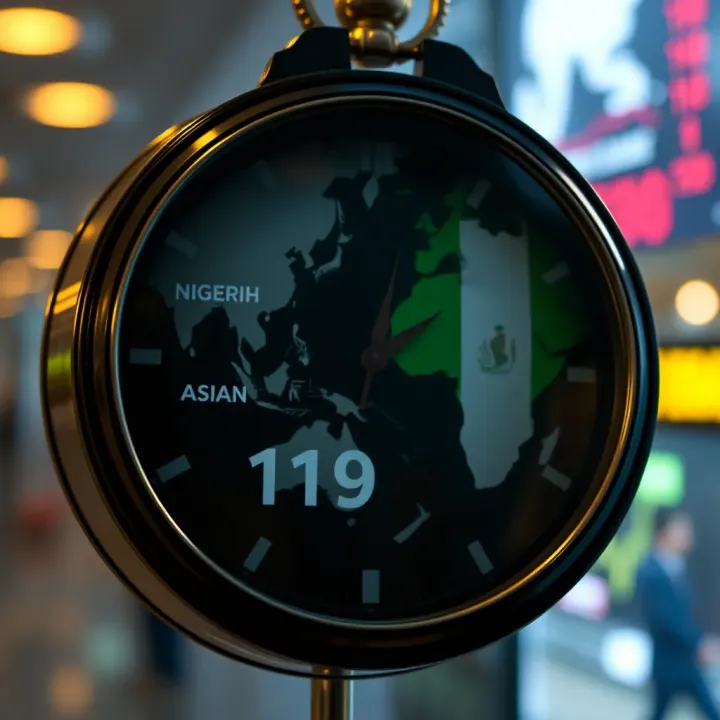
📈 Learn how the Asian trading session times match Nigeria’s clock and get key tips for Nigerian traders to stay ahead in global markets.

📈 Discover the London trading session times in Nigeria, how daylight saving shifts hours, and tips to boost your trading success during this key market period.
Based on 11 reviews